

| Recommended depth | 2–4 inches |
| Clearance from plant stems | 2–3 inches minimum |
| Best organic option for vegetable beds | Straw or shredded leaves |
| Best inorganic option for low-maintenance areas | Gravel or river rock |
| How often to replenish organic mulch | Annually or as depth drops below 2 inches |
What Mulch Actually Does for Your Garden
Mulch is any material spread over the soil surface around plants. It sounds simple, but a 2–4 inch layer delivers several benefits at once: it slows water evaporation, buffers soil temperature fluctuations, suppresses weed germination, and — depending on the type — gradually improves the soil beneath it.
| Recommended depth | 2–4 inches |
| Clearance from plant stems | 2–3 inches minimum |
| Best organic option for vegetable beds | Straw or shredded leaves |
| Best inorganic option for low-maintenance areas | Gravel or river rock |
| How often to replenish organic mulch | Annually or as depth drops below 2 inches |
That last point matters more than most gardeners realize. Healthy soil structure is the foundation of a productive garden, and organic mulches actively build it over time. If you want to understand what's happening beneath the surface, our guide to soil health explains how soil texture, biology, and pH interact with what you add on top.
Mulch also moderates the freeze-thaw cycles that heave plant roots in winter and reduces soil compaction caused by rain impact — two benefits that are easy to overlook until you're dealing with the damage they cause.
Types of Mulch and How Each One Works
Not all mulch is equal — the right choice depends on your goals, plant types, and how much upkeep you want to do.
Organic mulch
Any mulching material derived from plant or animal matter that breaks down over time, adding organic content to the soil. Examples include wood chips, straw, shredded leaves, and compost.
Inorganic mulch
Mulching materials that do not decompose, such as gravel, rubber, or landscape fabric. They provide weed suppression and some moisture retention but do not improve soil biology.
Volcano mulching
A common mistake where mulch is piled high against a tree trunk in a cone shape. This traps moisture against the bark and can cause rot, disease, and pest damage.
Freeze-thaw heaving
Repeated freezing and thawing of soil that causes it to expand and contract, sometimes pushing plant roots upward and out of the ground. A layer of mulch helps insulate soil and reduce this effect.
Organic Mulches
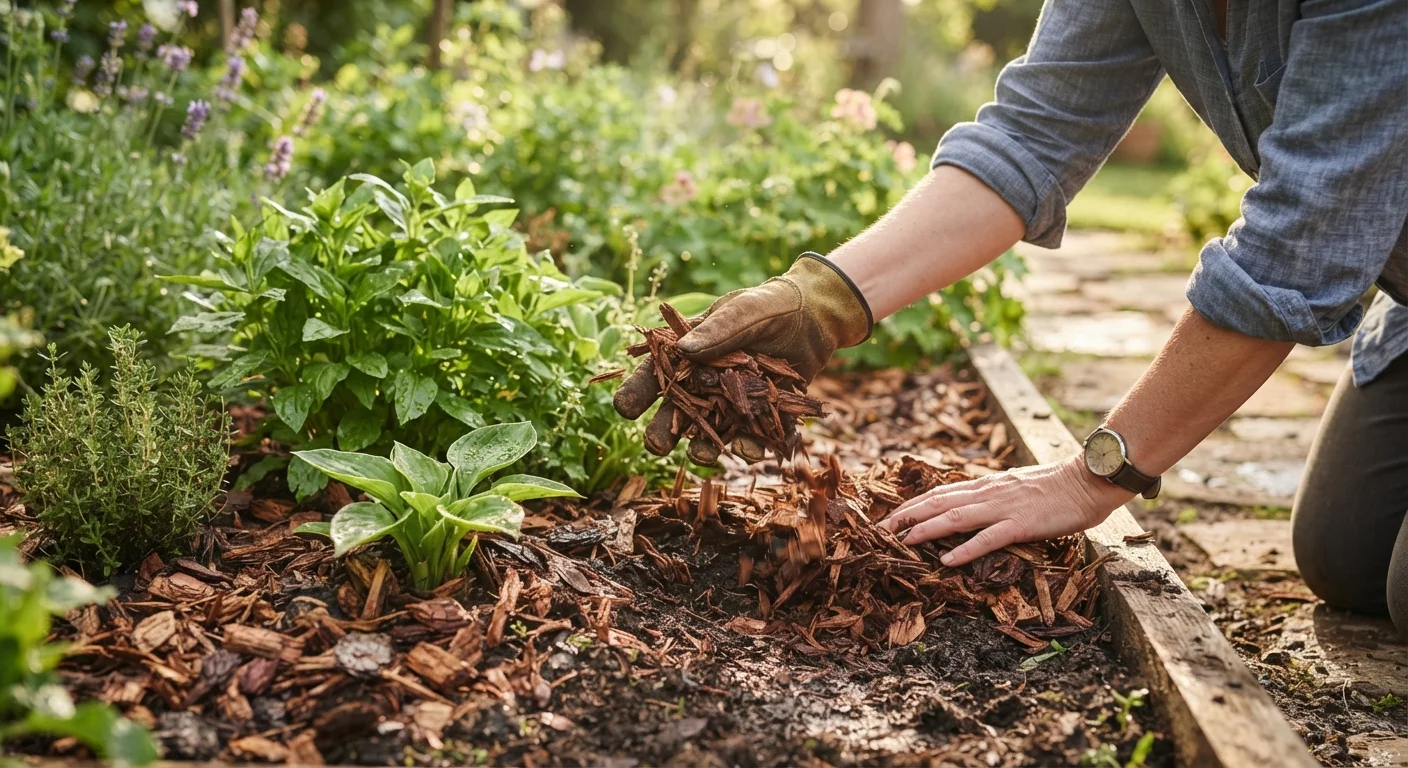
- Wood chips and bark: Break down slowly, excellent for perennial beds and around trees. Avoid mounding against plant stems or tree trunks (called "volcano mulching"), which traps moisture and invites rot and pests.
- Straw: Lightweight, inexpensive, and ideal for vegetable gardens. It decomposes within a season, so plan to replenish it. Avoid hay, which often contains viable weed seeds.
- Shredded leaves: A free, nutrient-rich option that breaks down into organic matter quickly. Run a lawn mower over fallen leaves to shred them before spreading. See our fall garden cleanup guide for how to time this in autumn.
- Compost: Feeds the soil while mulching. Best used as a thin 1–2 inch top-dressing rather than a thick layer, since it can compact and shed water if applied too heavily. For more on making your own, see our composting guide.
- Grass clippings: Good in thin layers in vegetable beds. Applied too thick, they mat together and block water and air.
Inorganic Mulches
- Gravel and river rock: Long-lasting and low-maintenance around drought-tolerant plants and shrubs. They don't improve soil but also don't break down, making them a permanent-ish solution.
- Landscape fabric: Suppresses weeds but can limit water infiltration and is difficult to remove once debris accumulates on top. Generally most effective under gravel, not directly in planting beds.
- Rubber mulch: Made from recycled tires, it lasts many years. However, it does not improve soil biology and may not be appropriate near edible plants.
When and How to Apply Mulch
Timing and technique matter as much as material choice.
25–70%
Reduction in soil moisture loss from mulching
University extension research consistently shows that mulched garden beds retain significantly more moisture than bare soil, reducing irrigation needs.
2–4 inches
Ideal mulch depth for most garden beds
This range is widely recommended by horticultural extension services as effective for weed suppression and moisture retention without limiting root oxygen.
Best Times to Mulch
- Spring: Apply after the soil has warmed but before summer heat arrives. Mulching too early in spring can slow soil warming and delay planting. A general indicator: wait until consistent daytime temperatures are above 50°F.
- Fall: Apply after the first hard frost to insulate plant roots through winter and reduce freeze-thaw heaving. Mulching before frost can sometimes keep soil warm enough to invite pests to overwinter near crowns.
- Anytime: Newly planted trees, shrubs, and perennials benefit from immediate mulching to protect their establishing root systems.
How to Apply It Correctly
- Remove existing weeds before laying mulch — mulch slows new weeds, but it won't kill established ones.
- Spread 2–4 inches deep. Less than 2 inches gives weeds a foothold; more than 4 inches can limit oxygen and water reaching roots.
- Keep mulch 2–3 inches away from plant stems and tree trunks to prevent moisture-related disease and pest problems.
- Check depth each season and top up as organic mulches decompose.
Mulch pairs naturally with good fertilizing practices — but more isn't always better on either front. Our article on common fertilizing mistakes covers how over-applying inputs can work against you. Similarly, if you're deciding between raised beds or in-ground planting, mulch selection may differ slightly by setup — raised beds often dry out faster and benefit from moisture-retaining organic options like straw or shredded leaves.