

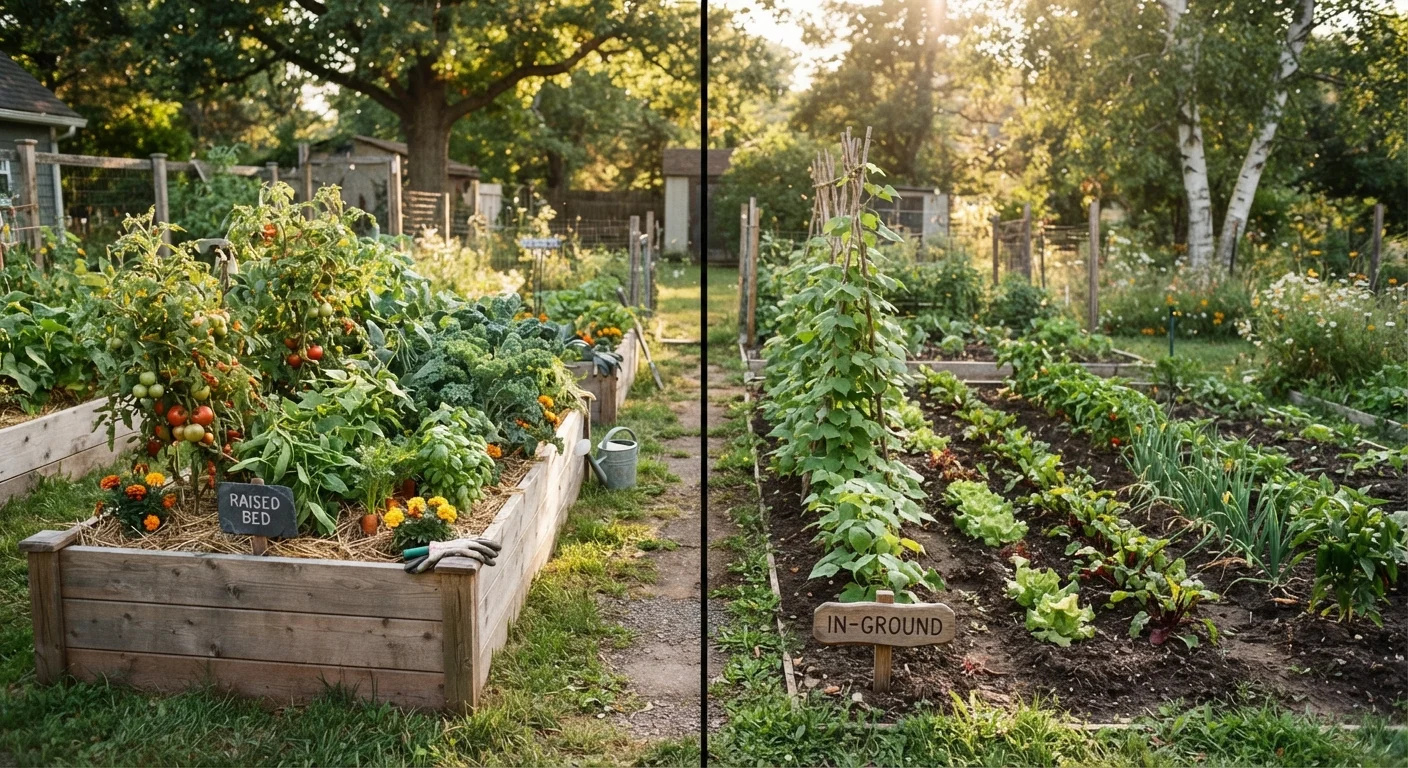
Key Takeaways
- Raised beds give you full soil control but require a meaningful upfront investment in materials and fill.
- In-ground planting costs less to start but may require soil amendment and more ongoing weed management.
- Drainage is naturally better in raised beds; in-ground gardens can struggle in clay-heavy or compacted soils.
- Raised beds warm up faster in spring, extending the growing season in cooler climates.
- In-ground gardens support larger root systems and are better suited for sprawling crops like squash or corn.
- Your existing soil quality, yard size, and physical comfort should drive the decision more than trends.
Option A
Raised Beds
The controlled, high-performance setup.
Best for: Homeowners with poor native soil, drainage issues, or physical limitations who want precise control over growing conditions.
Option B
In-Ground Planting
The traditional, low-barrier approach.
Best for: Gardeners with workable native soil who want to grow at scale without significant upfront investment.
If your yard has heavy clay or compacted soil
Raised Beds
Building above poor native soil is far more practical than amending it extensively. Raised beds let you fill with quality mix immediately and start growing without years of soil rehabilitation.
If you want to grow a large plot on a tight budget
In-Ground Planting
In-ground gardens require no structural materials and can cover a much larger area for the same cost. When native soil is decent, the return on effort is hard to beat.
If you have back, knee, or mobility concerns
Raised Beds
A well-built raised bed at the right height eliminates the need to kneel or bend deeply, making gardening far more accessible and sustainable over time.
If you're growing sprawling crops like melons, corn, or squash
In-Ground Planting
These crops need deep root runs and wide horizontal space. In-ground beds impose fewer physical constraints and naturally accommodate large-scale plantings.
If you're a first-time gardener wanting fast results
Raised Beds
Starting with a controlled soil environment reduces early frustrations from weeds, drainage problems, and inconsistent germination, building confidence in your first season.
Soil Control: The Core Difference
The single biggest practical difference between raised beds and in-ground planting comes down to soil. In a raised bed, you fill the structure entirely with a mix you choose — typically a blend of topsoil, compost, and other amendments. That means consistent texture, reliable drainage, and a known nutrient profile from day one.
In-ground planting works with whatever soil your yard already has. In many parts of the US, that means contending with clay, sand, compaction, or pH imbalances. Those issues are solvable — regular composting, cover cropping, and tilling can improve native soil meaningfully over time — but the process takes seasons, not weeks.
If your yard has rich, loamy native soil, in-ground planting is genuinely excellent. The root zone is essentially unlimited, which benefits deep-rooted or large crops. If your soil is poor or compacted, the raised bed's controlled environment offers a faster, more reliable path to a productive garden. For a thorough look at what raised beds actually deliver in practice, see the real trade-offs of raised garden beds.
| Criterion | Raised Beds | In-Ground Planting |
|---|---|---|
| Upfront cost | Higher (materials + fill soil) | Lower (amendments only) |
| Soil control | Complete — you choose the mix | Depends on native soil quality |
| Drainage | Excellent by design | Variable; poor in clay soils |
| Spring warm-up speed | Faster — 2–4 weeks earlier | Slower thermal gain |
| Weed pressure | Lower with fresh fill | Higher from existing seed bank |
| Root depth | Limited by bed depth | Unrestricted |
| Watering frequency | More frequent in heat | Retains moisture longer |
| Physical accessibility | Easier — no deep bending | Requires kneeling or bending |
| Scale potential | Limited by material cost | Easily expanded at low cost |
Cost, Effort, and Long-Term Maintenance
Raised beds carry a real upfront cost. Lumber, hardware cloth for the base (if you're protecting against burrowing pests), and quality fill soil add up quickly — a single 4×8-foot bed can run anywhere from $100 to $300 or more depending on materials and how you source fill. Larger gardens require multiple beds, multiplying those costs.
In-ground planting asks for far less money at the start. You may need soil amendments, basic tools, and a mulch layer, but there's no structural material to purchase or build. For homeowners with decent soil and a bigger planting area in mind, this matters considerably.
40%
Less water used with mulched in-ground beds
Applying a 2–3 inch layer of organic mulch in in-ground gardens can reduce moisture evaporation by roughly 40%, according to general horticultural guidance from university extension programs.
4×8 ft
Standard raised bed size for manageability
A 4-foot width is the widely recommended maximum so gardeners can reach the center from either side without stepping on the soil and compacting it.
10–12 in
Minimum fill depth for most vegetables
Most vegetable crops require at least 10–12 inches of quality soil to establish healthy root systems, a key consideration when sizing raised bed walls.
Over time, raised beds can dry out faster than in-ground plots — particularly in hot, dry summers — which may mean more frequent watering. Pairing either system with an efficient irrigation setup helps; drip irrigation vs. sprinkler systems covers how each watering method performs across both garden types.
Weed pressure is typically lower in raised beds, especially when you start with purchased fill rather than native soil. In-ground gardens are more exposed to weed seed banks in the surrounding soil. A consistent mulch layer reduces this significantly in either setup.
Seasonality, Climate, and Crop Fit
Raised beds warm up faster in spring because the soil mass is smaller and exposed on all sides. In cooler climates — think the Upper Midwest or the Pacific Northwest — this can mean starting seeds two to four weeks earlier than an in-ground bed in the same yard. That edge matters for crops like tomatoes, peppers, and eggplant that need a long warm-season window.
However, the same thermal exposure works in reverse: raised beds cool down faster in fall and can dry out quickly during summer heat. In-ground soil holds temperature and moisture more consistently over time, which suits crops that don't need an early-start advantage.
Soil Temperature and Frost Dates
Raised beds don't just warm faster — they can also freeze more quickly in fall, potentially shortening your season at the back end. If late-season frost is a concern in your region, row covers or cold frames can extend productivity for either bed type. Check your USDA hardiness zone and local average first and last frost dates when planning your planting calendar.
Crop selection also plays a role. Deep-rooted vegetables — carrots, parsnips, potatoes — benefit from the unrestricted soil depth of in-ground beds. Compact, high-intensity plantings of salad greens, herbs, and bush beans thrive in raised beds where dense planting is easy to manage. If you're just getting started, starting a vegetable garden from the ground up walks through site selection and soil prep for either method.
Think about what you plan to grow most — and how much of it — before committing to one approach. Many experienced gardeners use both: raised beds for warm-season crops and kitchen herbs, in-ground space for sprawling or large-scale plantings. You can explore planning a garden that works year after year to think through how plant types fit your preferred setup.