

Key Takeaways
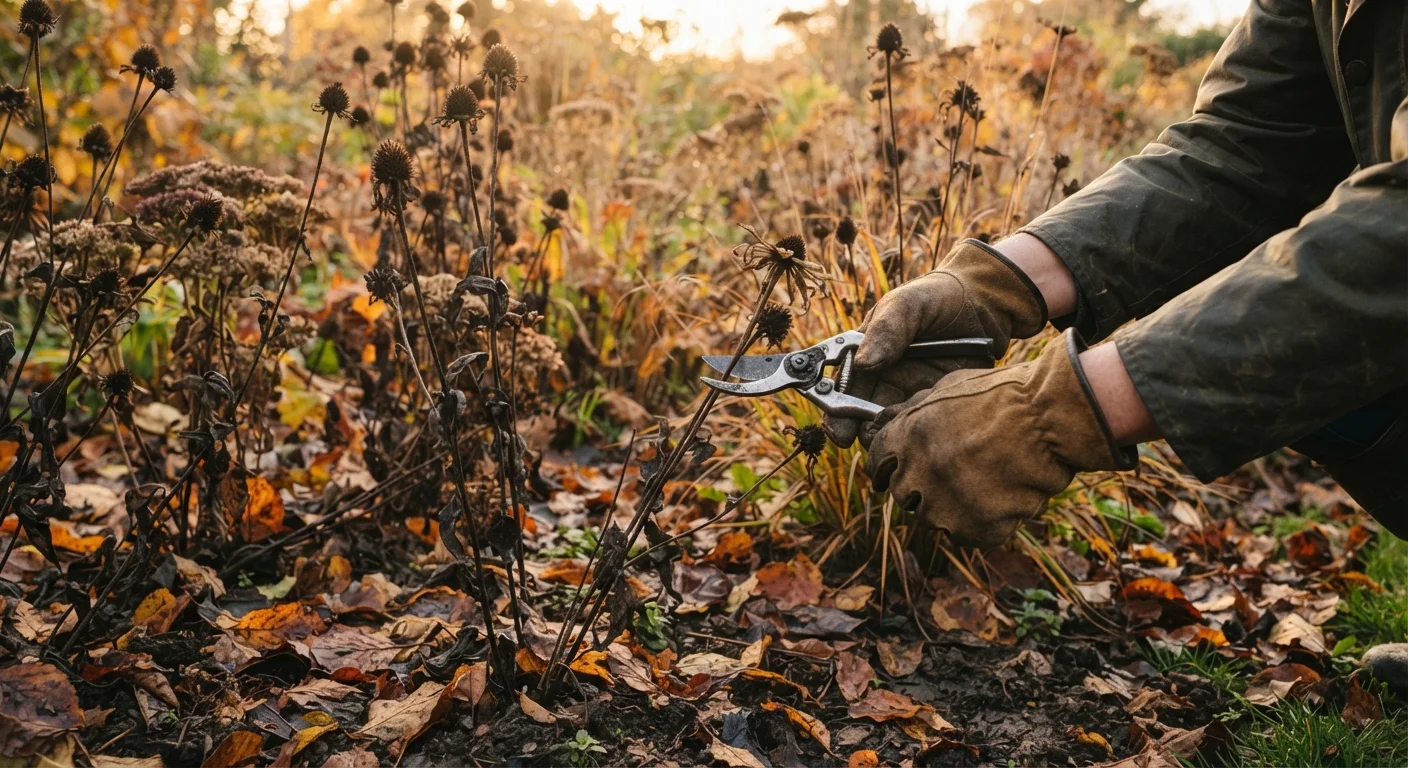
- Not all dead plant material should be cut down — seed heads and hollow stems support overwintering wildlife.
- Applying mulch before the ground freezes protects roots and suppresses early spring weeds.
- Fall is the right time to improve soil, not just clear it — compost and amendments work over winter.
- Diseased plant debris should be removed and discarded, not composted, to prevent next season's problems.
- Perennials and natives often benefit from being left standing until late winter or early spring.
Summary
22 items · 1.5–3 hours depending on garden size
Why Fall Cleanup Decisions Matter More Than You Think
It's tempting to treat fall garden cleanup as a single task: cut everything down, rake it up, and call it done. But what you leave standing — and what you remove — has real consequences for soil health, beneficial insects, birds, and the workload you'll face in spring.
Modern garden thinking has shifted away from the "clean slate" approach. Research from entomologists and ecologists consistently shows that hollow stems, standing seed heads, and loose leaf litter provide critical overwintering habitat for native bees, beetles, and other beneficial insects. At the same time, certain cleanup tasks genuinely do matter: removing diseased foliage, cutting back invasive spreaders, and protecting tender root zones before the ground freezes.
This checklist helps you make the right calls. Work through it once the first hard frost has passed but before the ground freezes solid — typically October through early December across most of the US, depending on your region.
For context on how the plants in your beds behave across seasons, our guide to perennials vs. annuals explains which types naturally die back versus which need to be removed entirely.
Bypass Pruners
Used to cut back perennial stems and dead annuals cleanly without crushing tissue.
Garden Rake
Clears fallen leaves from lawn areas and spreads mulch or compost evenly over beds.
Leaf Blower or Tarp
Speeds up leaf collection and makes it easier to move large volumes to a compost pile.
Compost Bin or Pile
Accepts healthy plant debris and fallen leaves to break down into soil amendment over winter.
Garden Fork or Spade
Turns compost into bed soil and works in amendments before the ground freezes.
Mulch (shredded leaves, straw, or wood chips)
Applied over perennial beds to insulate root zones and suppress early weed germination.
Trash Bags (for diseased material)
Separates diseased plant debris that must go to the trash rather than the compost pile.
Lightweight Horticultural Oil or Tool Oil
Applied to cleaned metal tool blades before storage to prevent rust over the winter months.
What to Remove: The Non-Negotiables
Some cleanup tasks aren't optional. Leaving the wrong things behind can mean more pest pressure, disease carryover, and stubborn weed problems next spring.
Remove: Disease and Pest Risks
Remove: Infrastructure and Structural Tasks
Leave: Wildlife and Ecological Value
Soil and Bed Preparation
Tools and Equipment Winterization
Diseased Debris Must Be Trashed, Not Composted
This is the single most consequential cleanup decision you'll make. Diseased plant material — anything showing mold, rot, or fungal spotting — must go into the garbage, not the compost pile. Home composting doesn't reliably destroy plant pathogens, and using infected compost is one of the fastest ways to reintroduce problems you spent all season fighting. If you're unsure whether a plant was diseased, err on the side of removing it.
What to Leave: Letting the Garden Work for You
Strategic restraint is one of the most underused tools in fall gardening. Before cutting something down, ask whether it's providing food, shelter, or soil cover. Native plants in particular tend to have co-evolved relationships with local wildlife that make their winter structures genuinely valuable.
If you're working toward a low-maintenance landscape, learning what to leave is just as important as learning what to do.
Don't Compost Diseased Plant Material
Home compost piles rarely reach the sustained temperatures needed to kill fungal spores and pathogens. Adding diseased foliage — such as leaves with black spot or stems with powdery mildew — risks spreading those problems throughout your garden next season when you apply the finished compost. Always bag and trash diseased material instead.
Cutting Back Too Early Can Harm Perennials
Trimming perennials before they've fully gone dormant can stress the plant and expose crowns to early frost damage. Wait until after a hard frost (below 28°F for several hours) before cutting back most herbaceous perennials. When in doubt, leave it until late winter — many plants that look dead are still moving energy into their root systems.
Soil and Bed Preparation Before Winter
Once you've decided what stays and what goes, shift your attention to the soil itself. Fall is actually an ideal time to improve it, because amendments applied now have months to integrate before spring planting begins.
Healthy soil is the foundation of everything — our Soil Health 101 guide covers how to read your soil's condition and what it actually needs. And if you're generating a lot of plant material during cleanup, consider starting or refreshing a compost pile — our composting at home guide walks through the process from start to finish.
For mulching guidance — which type to use, how thick to apply, and when — see our article on garden mulch types and application.