

Key Takeaways
- Native plants evolved to thrive in your region's soil and rainfall, reducing the need for irrigation and fertilizer.
- They support local wildlife, including pollinators, birds, and beneficial insects, more effectively than exotic plants.
- "Native" is a regional term — a plant must be native to your specific ecoregion to deliver full ecological benefits.
- Native plants generally require a settling-in period of one to two seasons before their low-maintenance reputation kicks in.
- Mixing natives with well-adapted non-invasive plants is a practical approach for most homeowners.
- Choosing the right plant for your specific sun, soil, and moisture conditions matters more than the native label alone.
Native Plants
Native plants are species that occurred naturally in a specific region before European settlement — they evolved in place alongside local soils, rainfall patterns, and wildlife. Because they're already adapted to local conditions, they typically require less watering, fertilizing, and pest control than plants brought in from other climates or countries. They also tend to support local insects, birds, and pollinators far more effectively than exotic ornamentals.
"Native" is geographically specific: a plant native to the Pacific Northwest may behave like an invasive species in the Southeast. Always verify nativity to your specific ecoregion, not just your country or state.
What Makes a Plant 'Native' in the First Place
The word native gets used loosely in garden centers, which is part of why homeowners find it confusing. Botanically, a native plant is one that established itself in a region through natural processes — not human introduction — over hundreds or thousands of years. During that time, it co-evolved with local insects, birds, soil organisms, and weather patterns.
What this means practically: a native plant in Ohio has adapted to Ohio's clay-heavy soils, cold winters, and wet springs. It doesn't need you to replicate a different climate to survive. By contrast, many popular ornamentals originate in Asia or Europe and need ongoing intervention — extra watering, fertilizer, or pesticides — to thrive outside their home environment.
One important clarification: nativity is regional, not national. A plant native to coastal California may struggle badly in Tennessee, even though both are in the same country. When you're researching options, look for plants native to your specific ecoregion — a geographic zone defined by shared climate, soil type, and native species composition. Your local cooperative extension office is a good starting point for regionally accurate plant lists.
Watch Out for 'Nativar' Labeling
Nurseries sometimes sell cultivated varieties of native plants — known as 'nativars' — under names that sound like straight species. These can be valuable in the garden, but some have been bred in ways that reduce their value to pollinators (for example, double-flowered varieties that are harder for bees to access). When ecological benefit is a priority, look for straight species and verify with your nursery.
Why Landscapers Are Recommending Them More Often
Professional landscapers increasingly recommend native plants for a simple reason: they tend to perform better over time with less intervention. For homeowners who want attractive outdoor spaces without constant upkeep, that's a compelling combination. Low-maintenance landscaping increasingly relies on native plant selection as a core strategy.
Up to 75%
Potential reduction in yard water use
The EPA estimates that replacing traditional turf and ornamentals with regionally appropriate, drought-tolerant plants — including natives — can reduce outdoor water use by up to 75% in some climates.
~3 billion
Birds lost in North America since 1970
According to a 2019 study published in Science, North America has lost roughly 3 billion birds since 1970, with habitat loss and food source decline — including loss of insect populations supported by native plants — cited as major contributing factors.
35%
Of U.S. land covered by lawns
The EPA estimates that turf grass covers roughly 30–40 million acres in the United States, making lawn alternatives like native plant beds a meaningful opportunity for environmental improvement at scale.
There's also an ecological case. Native plants provide food and habitat for local wildlife in ways exotic ornamentals often can't. Research by entomologist Doug Tallamy and others has shown that native oaks support hundreds of caterpillar species, while many non-native ornamental trees support very few. Those caterpillars, in turn, are critical food for nesting birds. The ecological web native plants sustain is largely invisible — but it's real.
Finally, as water costs rise and drought conditions affect more parts of the country, plants that can survive on natural rainfall alone look increasingly attractive from a practical and financial standpoint.
The Honest Tradeoffs: What Native Plants Won't Fix
Native plants aren't a cure-all, and it's worth being clear-eyed about their limitations. First, establishment takes time. Most native perennials follow the old gardener's saying: "sleep, creep, leap" — they spend their first year settling in, grow modestly in year two, and really take off in year three. During that window, they still need watering and attention.
Second, not every native plant is the right fit for every yard. A native species that thrives in boggy woodland soil won't perform well in a sunny, dry front lawn — and planting it there won't magically change that. Matching plant to site conditions matters as much as the native label. Understanding how perennials and annuals fit your garden plan can help you make better use of native options across different planting scenarios.
Third, "native" doesn't automatically mean pest-free or disease-resistant. Native plants can still be affected by unusual weather, compacted soil, or conditions that are far outside their natural range. Think of native status as a strong advantage, not a guarantee.
Start With Your Cooperative Extension Office
Every U.S. state has a cooperative extension service connected to a land-grant university. These offices publish regionally specific native plant lists that are far more useful than generic national guides. Many also offer free soil testing, which helps you match plant selection to your actual site conditions rather than guessing.
Getting Started Without Overhauling Your Entire Yard
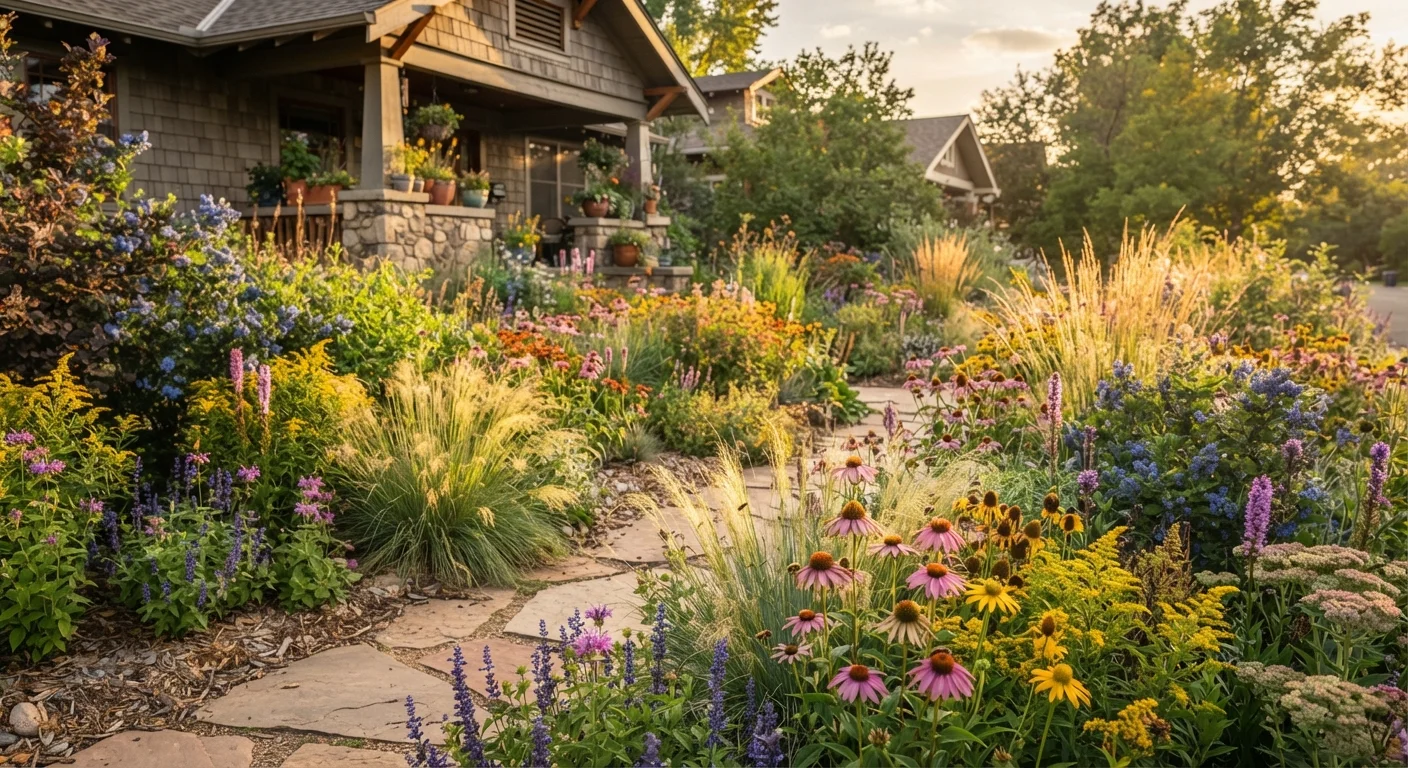
You don't need to rip out everything and start over to benefit from native plants. Many homeowners start small — replacing a struggling ornamental bed with native coneflowers and black-eyed Susans, or planting a native shrub border along a fence line. These modest changes can meaningfully improve habitat and reduce watering demands without a complete redesign.
A few practical starting points worth considering:
- Start with problem areas. Spots where non-native plants have repeatedly failed — too dry, too shady, too wet — are often ideal candidates for a native plant that's adapted to exactly those conditions.
- Choose straight species over cultivars where possible. Many native plants sold at nurseries are cultivated varieties bred for showier flowers or different foliage. These can still be useful, but straight species often provide better ecological value for pollinators and birds.
- Don't plant and forget immediately. Even natives need consistent watering for their first season. Mark your calendar and set up simple irrigation until roots are established.
For a broader picture of how native plants fit into a garden that largely takes care of itself, see our guide on low-maintenance landscaping principles. And when planning your fall garden tasks, knowing what to leave standing — like native seedheads and leaf litter — can benefit local wildlife through winter.