

Key Takeaways
- Perennials return each year from their root systems, reducing replanting time and long-term cost.
- Annuals complete their full life cycle in one season, delivering reliable, season-long color.
- Most successful home gardens use both types together for structure, flexibility, and year-round interest.
- Perennials typically require a year or two to establish before performing at their peak.
- Annuals offer an easy way to fill gaps while perennials mature or to try new color combinations.
Option A
Perennials
The long-term backbone of any low-maintenance garden.
Best for: Homeowners who want plants that return each season with minimal replanting effort.
Option B
Annuals
The flexible, color-rich option for seasonal impact.
Best for: Gardeners who want bold, continuous bloom color and enjoy refreshing their garden each year.
If you want to minimize replanting labor year after year
Perennials
Perennials regrow from established root systems each spring, meaning you plant once and enjoy for multiple seasons with relatively little intervention.
If you want vivid, uninterrupted color from spring through frost
Annuals
Annuals are bred for long, prolific bloom periods and will fill your garden with consistent color for the entire growing season.
If you're building a new garden bed on a limited budget
Perennials
Though the upfront cost per plant is higher, perennials pay back their investment by returning each year without repurchasing.
If you enjoy changing up your garden's look each season
Annuals
Annuals let you experiment with different colors, textures, and varieties every year without any long-term commitment to a single planting plan.
If you want the most resilient, practical long-term garden design
Perennials
A perennial-anchored garden with annuals added for seasonal interest gives you structure, reliability, and flexibility — the hallmark of a well-designed landscape.
What Actually Separates Perennials from Annuals
The distinction is straightforward once you understand the plant life cycle. Annuals germinate, flower, set seed, and die within a single growing season. They put all their energy into blooming, which is why they tend to flower heavily and for extended periods. Common examples include zinnias, marigolds, impatiens, and petunias.
Perennials live for three or more years. After their above-ground growth dies back in fall, the root system overwinters in the ground and sends up new growth the following spring. Coneflowers, black-eyed Susans, daylilies, and hostas are familiar examples found in American home gardens across most climate zones.
A third category worth knowing: biennials (such as foxglove and hollyhock) complete their life cycle over two years — growing foliage in year one and flowering in year two before dying. They're less common but often mistaken for perennials by new gardeners.
| Criterion | Perennials | Annuals |
|---|---|---|
| Lifespan | 3+ years from same root | One growing season |
| Upfront cost | Higher per plant | Lower per plant |
| Replanting frequency | Once (plant and return) | Every year |
| Bloom duration | Typically 2–4 weeks | Spring through frost |
| Establishment time | 1–2 seasons to peak | Immediate season color |
| Design flexibility | Fixed placement long-term | Change layout each year |
| Maintenance level | Low once established | Moderate (replant, deadhead) |
Cost, Effort, and the Long Game
One of the most practical reasons homeowners lean toward perennials is long-term economy of effort. You invest more per plant upfront — perennials typically cost more at the nursery than annuals — but that cost is spread across many seasons. Annuals require repurchasing every year, which adds up in both dollars and planting time.
That said, perennials aren't effort-free. Most take one to two full growing seasons to establish, a phenomenon often described as "sleep, creep, leap" — they rest the first year, begin spreading in the second, and hit their stride in the third. During that window, annuals serve a genuinely useful role: filling in bare spots, suppressing weeds, and keeping beds looking intentional while perennials mature.
2–3 years
Time for perennials to reach full performance
Garden educators commonly reference the 'sleep, creep, leap' rule to describe a perennial's establishment arc over its first three seasons.
~$3–$6
Typical annual six-pack price range at nurseries
Annuals are generally sold in multi-packs, making them cost-effective for filling large areas quickly, though costs recur every season.
For homeowners focused on reducing ongoing garden maintenance, pairing a perennial framework with select annuals is a widely recommended approach. See our low-maintenance landscaping principles for design strategies that reduce long-term workload without sacrificing curb appeal.
Bloom Time and Seasonal Interest
One honest trade-off with perennials: most bloom for a relatively short window — often two to four weeks. A garden planted exclusively with perennials can end up with blooming peaks followed by stretches of green-only foliage. Strategic planning around bloom succession (early, mid, and late-season perennials) helps, but it takes forethought.
Annuals sidestep this entirely. Most are bred to bloom continuously from late spring until frost without the downtime. If a consistently colorful garden is your goal, annuals earn their keep in containers, window boxes, and front borders where visual impact is a priority throughout the season.
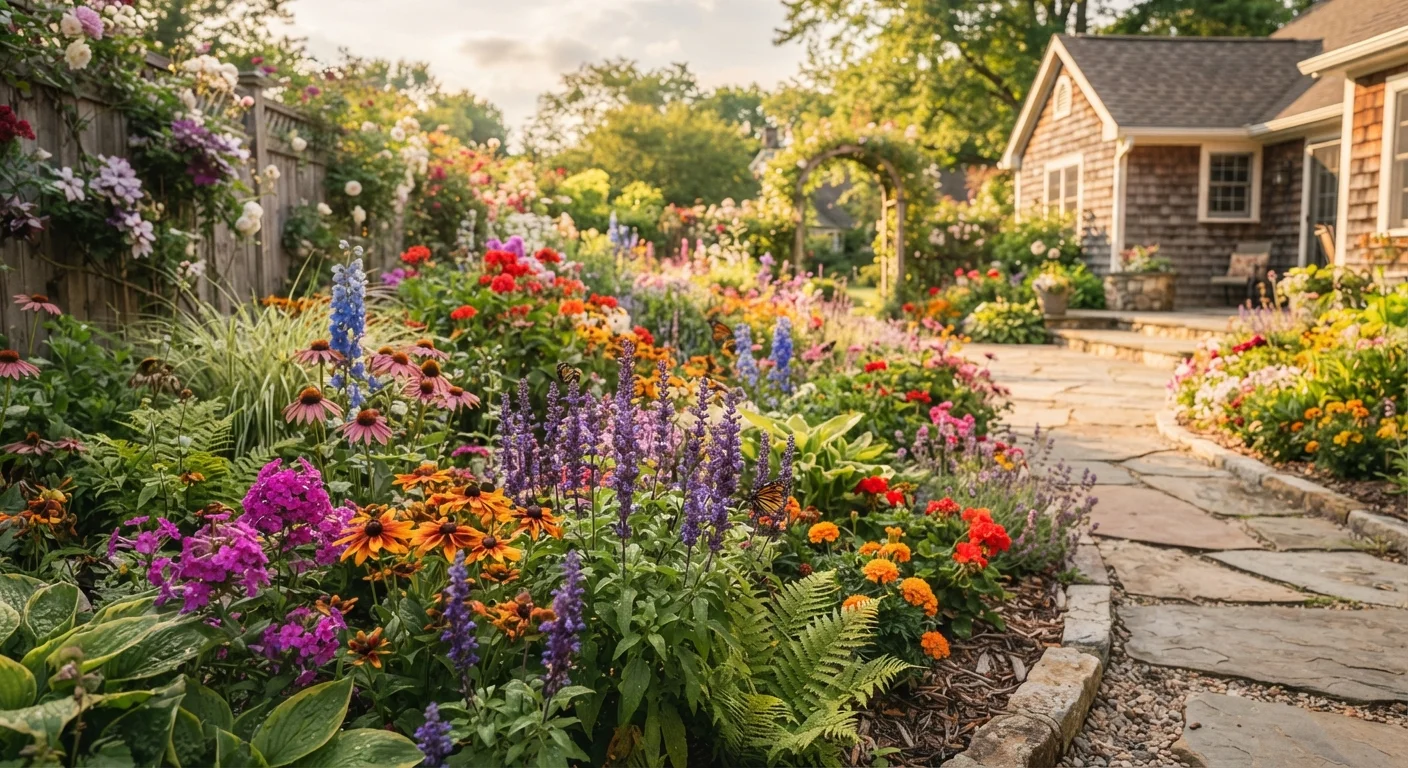
Combining both types is where most experienced gardeners land. Use perennials to create structure and reliable seasonal anchors; use annuals to fill color gaps, extend interest into late summer, and experiment with new varieties without a long-term commitment. For a comprehensive look at how planting choices fit into broader outdoor design, our guide on designing an outdoor space you'll actually use all season covers layout, zoning, and seasonal flow.
Self-Seeding Annuals: A Middle-Ground Option
Some annuals — including zinnias, cleome, and bachelor's buttons — drop seeds at the end of the season that germinate the following spring. While not technically perennials, they can return year after year under the right conditions. If you skip heavy fall cleanup in those areas, you may find volunteer seedlings emerging without replanting. Results vary by climate and soil conditions, so treat it as a pleasant bonus rather than a reliable system.
Planning a Garden That Does Both Jobs Well
A practical starting point: map your beds into layers. Use taller, structural perennials — ornamental grasses, coneflowers, rudbeckia — as the backdrop. Add mid-height annuals like zinnias or salvia to the middle layer for continuous color. Use low-growing annuals or groundcover perennials along the front edge for definition.
When selecting perennials, match plants to your USDA Hardiness Zone. A perennial rated for Zone 6 won't reliably overwinter in a Zone 5 garden without extra protection. Your local cooperative extension service is a reliable, free resource for zone-appropriate plant lists without any commercial bias.
Also consider incorporating native plants into your perennial selections. Native perennials are adapted to your regional climate and soil, often require less water once established, and support local pollinators. Many function as low-effort, high-reward anchors in a mixed garden. When fall arrives, your approach to cleanup matters too — fall garden cleanup decisions directly affect how well both perennials and self-seeding annuals return the following spring.