

Key Takeaways
- Overwatering and underwatering produce almost identical symptoms, making correct diagnosis essential before acting.
- Watering on a fixed schedule regardless of soil moisture is one of the most damaging habits for plants.
- Evening watering encourages fungal disease by leaving foliage and soil surface wet overnight.
- The finger-test — pressing a finger two inches into the soil — remains one of the most reliable watering guides.
- Drainage quality and pot or bed conditions matter as much as how much water you apply.
Why Watering Goes Wrong So Easily
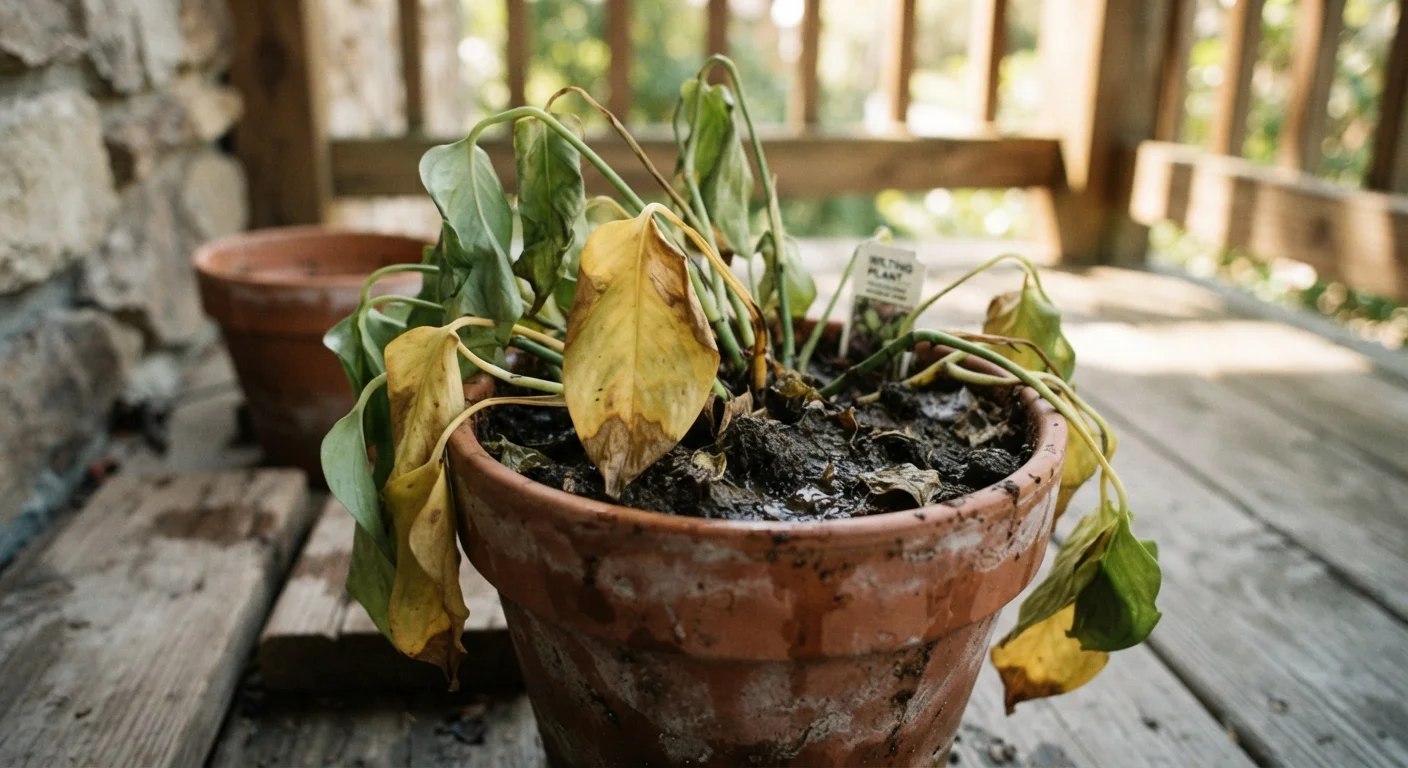
Watering sounds like the simplest part of gardening, but it accounts for a surprising share of plant losses. The core problem is that stressed plants rarely tell you clearly what they need. Yellow leaves, drooping stems, and brown edges are symptoms of both too much and too little water — and treating the wrong problem accelerates decline rather than reversing it.
Most watering mistakes stem from good intentions: following a strict schedule, being generous "just in case," or reacting to surface cues that don't reflect what's happening in the root zone. Understanding why these habits form is the first step toward breaking them. For a broader look at building a garden that requires less constant intervention, see our low-maintenance landscaping principles.
Watering on a fixed schedule regardless of actual soil moisture.
Why it happens: Gardeners look for a routine that removes guesswork, so a calendar-based approach feels reliable and consistent.
Watering shallowly and frequently instead of deeply and less often.
Why it happens: Quick daily sprinkles feel attentive, and surface soil dries out visibly fast, prompting another light watering.
Watering in the evening, leaving foliage wet overnight.
Why it happens: Evening often feels like the most convenient time after a workday, and gardeners know midday watering in direct sun can stress some plants.
Ignoring drainage and assuming all pots and beds drain equally.
Why it happens: Attention goes to the water being added, not to where it goes afterward — especially with containers that may have blocked drainage holes.
Treating all plants in a bed with the same watering routine.
Why it happens: Watering everything at once is faster, and visual groupings in a bed can obscure the fact that individual plants have very different moisture needs.
Reading the Real Warning Signs
Before adjusting your watering routine, learn to distinguish moisture stress from other issues. Overwatered plants typically have soft, mushy stems at the base and soil that stays wet days after watering. Roots may appear brown and slimy rather than white and firm. Underwatered plants tend to have dry, crumbly soil, brittle stems, and leaves that curl inward rather than droop limply.
Don't Treat Symptoms Without Diagnosing First
Applying more water to a plant that already has root rot — because wilting looks like drought stress — can be fatal to the plant within days. Always check soil moisture before adding more water. If in doubt, wait 24 hours and re-examine the soil rather than acting immediately on surface symptoms alone.
The most reliable diagnostic tool costs nothing: push your index finger two inches into the soil. If it feels moist, hold off watering. If it feels dry at that depth, water thoroughly. For container plants, lifting the pot gives an additional clue — a surprisingly light pot typically signals dry soil throughout.
Delivery method matters too. Surface-only watering from a hose or sprinkler may wet the top inch without reaching deeper roots, giving plants a false signal of hydration. If you're weighing delivery systems, our comparison of drip irrigation vs. sprinkler systems walks through the practical trade-offs for home gardens.
Also keep in mind that drainage problems outside the plant bed can compound watering issues indoors and out. Poor yard grading can pool water against foundation plantings, saturating soil even when you haven't watered recently. Our guide on grading, drainage, and downspouts covers how slope and soil interact to direct water flow.
~50%
Of household outdoor water use lost to inefficiency
The U.S. Environmental Protection Agency estimates that roughly half of outdoor water used by households is lost to evaporation, wind, or runoff due to inefficient watering practices.
2 inches
Soil depth to test before watering
Horticultural extension services commonly recommend checking soil moisture at a depth of two inches as a practical guide for most vegetable and ornamental plants.