

Key Takeaways
- Concrete driveways, brick patios, and vinyl siding can generally handle pressure washing with the right nozzle and distance.
- Soft or aged surfaces — including wood shingles, stucco, and older painted siding — are easily damaged by high pressure.
- Nozzle selection and standoff distance matter more than PSI alone when protecting surfaces.
- Always pre-wet nearby plants and cover electrical outlets before you start.
- When in doubt about surface integrity, a garden hose and scrub brush is the safer starting point.
Why Surface Type Is the Most Important Variable
Pressure washing is one of the fastest ways to make a home's exterior look years newer — but the machine doesn't know what it's hitting. A pressure washer that's perfectly calibrated for a concrete driveway can strip paint, gouge wood, or blast mortar out of aging brick if pointed at the wrong surface.
The key distinction is between hard, dense surfaces that tolerate concentrated water force and soft, porous, or coated surfaces that absorb or deflect it badly. Before you pull the trigger, walk your property and assess each area individually rather than treating the whole exterior as a single job.
This article is part of our broader guide to routine maintenance tasks first-time owners overlook, where surface care and exterior upkeep come up repeatedly as common gaps.
Surfaces That Generally Handle Pressure Washing Well
The following surfaces are typically good candidates — though condition and age still matter in every case:
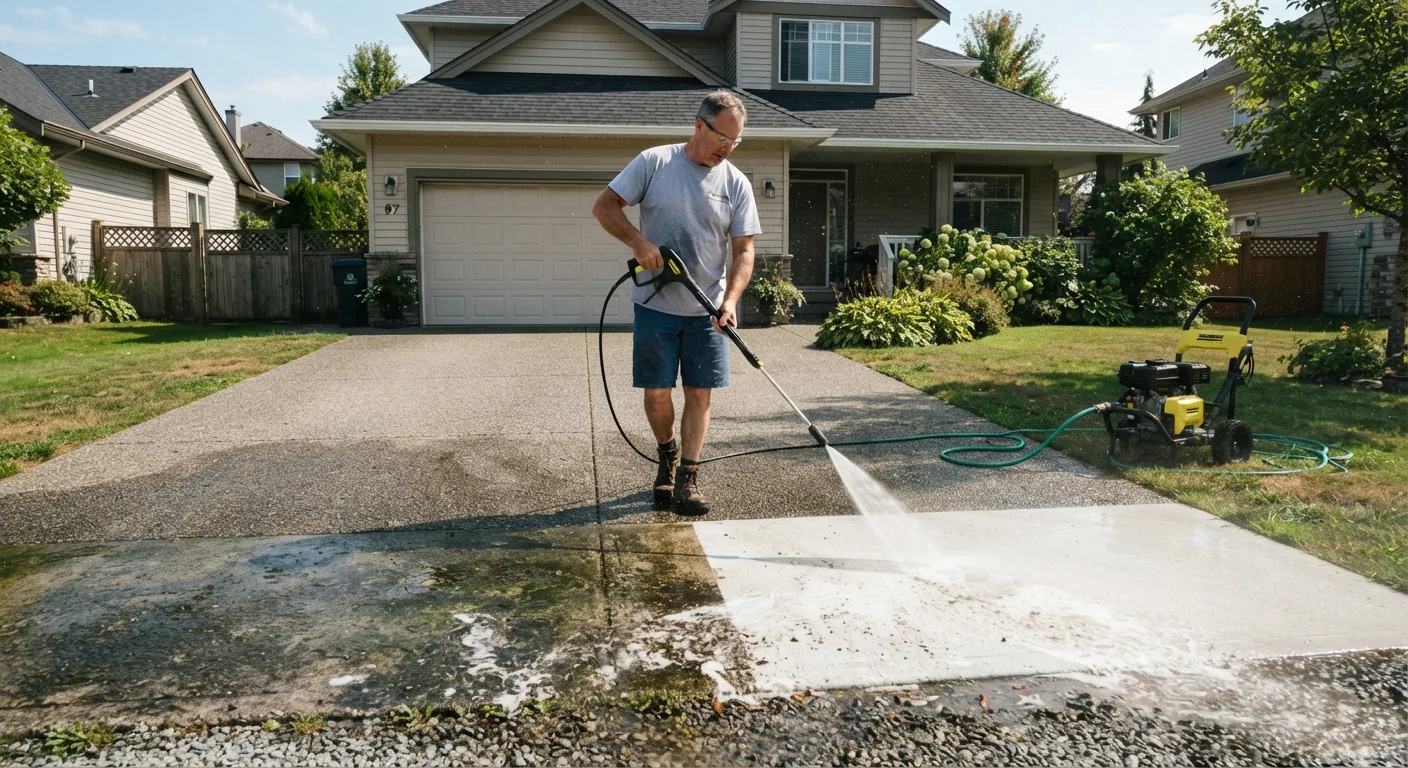
- Concrete driveways and walkways: Dense concrete handles high pressure well. Use a 25-degree (green) nozzle and keep the wand moving to avoid streaking or etching.
- Brick patios and walls: Solid brick in good condition responds well, but check mortar joints first. Crumbling or soft mortar can be dislodged by pressure washing, making repairs necessary before cleaning.
- Vinyl siding: One of the most pressure-washer-friendly cladding types. Use a 40-degree (white) nozzle, angle the spray downward, and avoid forcing water behind panels.
- Composite decking: Most composite products tolerate moderate pressure. Check the manufacturer's guidelines; some specify a maximum PSI to avoid surface pitting.
- Metal gutters and downspouts: Exterior surfaces clean up well. See our guidance on what gutter care actually involves before hosing out the interior, where debris and joint integrity matter more.
1,500–3,000
PSI range for most residential exterior cleaning
Industry guidelines generally place residential cleaning tasks between 1,500 and 3,000 PSI, with lower settings for siding and higher for concrete.
12–18 inches
Recommended minimum standoff distance for most surfaces
Professional pressure washing guides consistently recommend starting at least 12 inches from the surface and adjusting only after testing a small area.
Surfaces to Approach with Caution — or Skip Entirely
These are the surfaces that generate the most avoidable damage calls:
- Wood siding and shingles: Pressure washing can raise the grain, drive moisture into the wood, and strip paint — especially on older homes. A soft wash (low-pressure with appropriate cleaning solution) or hand scrubbing is usually safer.
- Stucco: Traditional three-coat stucco is vulnerable to cracking and water intrusion under high pressure. Synthetic stucco (EIFS) is even more sensitive. If your home has stucco, consult a professional cleaner familiar with the material.
- Older painted surfaces: Paint that's already chalking, bubbling, or peeling will come off in sheets. Pressure washing pre-1978 painted surfaces also risks spreading lead paint particles — this is a genuine safety hazard requiring special handling.
- Asphalt roof shingles: Pressure washing voids most shingle warranties and strips protective granules, shortening roof life significantly. Low-pressure or no-pressure chemical cleaning is the industry-recommended approach for roofs.
- Window screens and seals: Even moderate pressure can tear screens and push water past window seals. Remove or mask screens; never aim directly at window frames or caulk lines. For more on seal integrity, see our article on how caulk and weatherstripping work and when they fail.
Soft Washing Is Often the Smarter Choice
For surfaces like stucco, aged wood, and roof areas, "soft washing" — low pressure combined with a targeted cleaning solution — accomplishes what high pressure cannot safely do. Many professional exterior cleaners use this method as their default for anything other than concrete. If you rent a pressure washer, ask the rental center whether a downstream soap injector is included; it makes soft washing straightforward even on a standard machine.
Practical Setup and Safety Steps
Good results depend as much on preparation as on technique. Before you start:
During the job, always keep the nozzle moving — pausing in one spot concentrates pressure and risks surface damage. Work top to bottom so dirty runoff doesn't flow over areas you've already cleaned. On driveways, overlap each pass slightly to avoid visible lines.
Water management matters beyond the surface itself. Runoff carrying mold, mildew, and cleaning agents can affect nearby plant beds and hardscape. For guidance on where that water goes once it leaves your driveway or foundation edge, our article on grading, drainage, and downspouts explains how slope and drainage work together.
If you're unsure whether a project is within safe DIY territory — especially on elevated surfaces or aging materials — our DIY vs. contractor decision guide can help you think through when professional help makes more sense.