

Key Takeaways
- Portugal's compact, walkable cities make independent navigation straightforward for first-time solo travelers.
- A strong culture of hospitality means solo travelers rarely feel out of place or unwelcome.
- The country offers a wide range of experiences — urban exploration, coastal hiking, and rural wine regions — within a small geographic footprint.
- Public transportation connects major cities reliably, reducing the need to rent a car.
- Portugal consistently ranks among Europe's more affordable destinations for food, accommodation, and activities.
- Solo travelers report returning because the country rewards slow, curious exploration over checklist tourism.
Solo Travel in Portugal
Solo travel in Portugal means exploring the country independently — setting your own pace, choosing your own route, and making decisions without coordinating with a group. Portugal has become a standout destination for this style of travel because its infrastructure, culture, and geography align unusually well with what independent travelers need: safety, ease of navigation, affordability, and genuine warmth from locals.
Portugal is a Schengen Area member state, meaning US passport holders can visit for up to 90 days within a 180-day period without a visa — though travelers should always verify current entry requirements with official sources before booking.
What Makes Portugal Different for Independent Travelers
Ask a solo traveler who's been to Portugal why they keep going back, and you'll rarely hear a single reason. It's more of an accumulation — the neighborhood that took an unplanned hour to wander through, the meal eaten at a marble counter with no agenda, the train ride through terraced hillsides. Portugal has a quality that suits independent exploration in a way that's hard to manufacture: it moves at a pace that lets you actually absorb it.
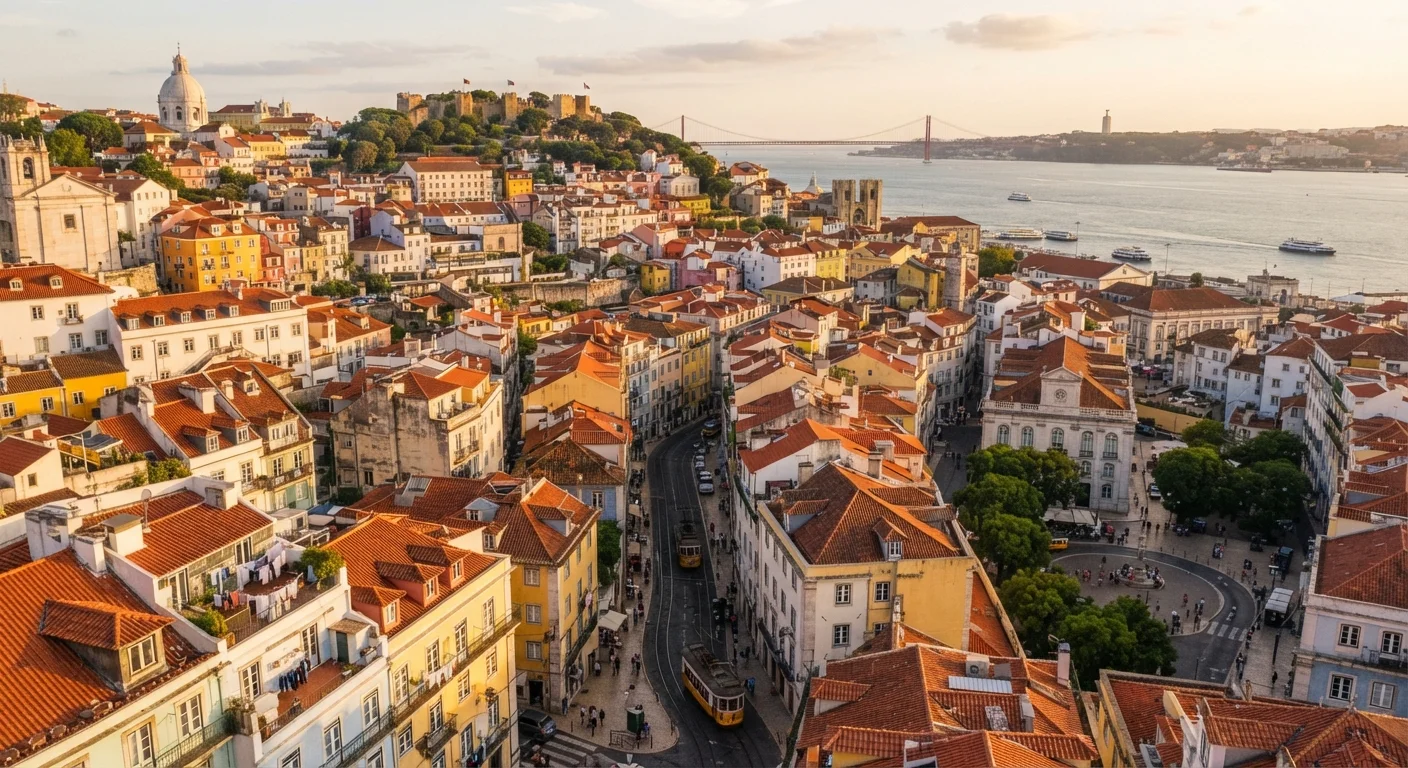
The country's cities are genuinely walkable. Lisbon's neighborhoods — Alfama, Mouraria, Belém — each have their own texture, and getting between them on foot or by tram is part of the experience rather than a logistical hurdle. Porto's compact riverside layout means a solo traveler can cover a lot of ground in a few days without ever feeling rushed or dependent on a tour group.
For travelers weighing different trip styles, it's worth reading about how solo and group travel differ in planning approach — Portugal happens to play particularly well to the advantages of going it alone.
“Portugal has a rare combination: it's easy enough to navigate that you never feel lost, but layered enough that you never feel like you've seen everything. That's a hard balance for any country to strike.”
— Travel & Trips Editorial Team, Independent travel writers covering European destinations
The Practical Case: Infrastructure That Works
One underrated reason solo travelers return to Portugal is that the logistics are simply manageable. The train network links Lisbon, Porto, and Coimbra without requiring a rental car. Metros in both major cities are straightforward to navigate. Even regional bus routes — connecting smaller towns in the Alentejo or along the Silver Coast — run reliably enough that you don't need to build your whole itinerary around a vehicle.
That matters more than it sounds. When you're traveling alone, every logistical friction costs you mental energy that could go toward enjoying where you are. Portugal minimizes that friction.
90 days
Visa-free stay for US passport holders
Under Schengen Area rules, US citizens can stay in Portugal (and other Schengen countries) for up to 90 days in any 180-day period without a visa — verify current requirements with official sources before travel.
Top 5
Consistent ranking in European safety indexes
Portugal regularly appears near the top of global peace and safety indexes, including the Global Peace Index published annually by the Institute for Economics and Peace.
500+ km
Long-distance coastal walking trails
The Rota Vicentina and Fishermen's Trail together cover more than 500 kilometers of Portugal's Atlantic coastline, offering solo hikers extended independent routes with guesthouse infrastructure.
Accommodation ranges from hostels with strong social common areas (useful for solo travelers who want optional connection) to guesthouses and rural quintas (farm stays) for those who prefer solitude. Most Portuguese cities have dense neighborhoods of affordable dining options where eating alone at a small restaurant or tasca feels completely natural — not awkward.
If you're building your itinerary, a realistic day-by-day framework can help you balance activity with genuine rest — something Portugal actively encourages.
The Slower Reasons: Culture, Pace, and Atmosphere
Beyond logistics, Portugal has a cultural atmosphere that solo travelers describe as unusually welcoming without being intrusive. Locals tend to be genuinely warm without the performative hustle common in heavily touristed destinations. Sitting alone with an espresso and a pastel de nata in a local café doesn't attract attention — it fits right in.
The concept of saudade — often translated as a bittersweet longing, a Portuguese emotional sensibility — permeates the country's music, food, and even its architecture. For solo travelers, there's something freeing about being in a culture that makes space for quiet reflection rather than pressuring you to be constantly social or entertained.
Build in Unscheduled Time
One of Portugal's greatest strengths for solo travelers is that the best moments often happen off-plan — a side street, an unmarked viewpoint, a conversation with a guesthouse owner. Resist the urge to fill every hour. Building two to three unscheduled hours into each day gives you room to follow what genuinely interests you rather than a pre-set itinerary.
The geographic variety also rewards repeat visits. A solo traveler who spent a week in Lisbon might return to spend time in the Douro Valley vineyards, the medieval town of Óbidos, or hiking the Rota Vicentina coastal trail. Portugal doesn't feel exhausted after one trip — it opens up in layers.
If you're weighing whether Portugal fits your travel style — urban or nature-focused — this framework for matching destination type to your preferences is worth a read before you book.
Getting Started: Planning Your First Solo Trip to Portugal
Portugal is genuinely accessible as a first international solo destination, but like any independent trip, it rewards thoughtful preparation. Start with a realistic scope: Lisbon and Porto are natural anchors, and adding one regional area — the Algarve coast, the Alentejo plains, or the Sintra hills — gives you variety without overcomplicating logistics.
Consider how much structure you want versus flexibility. Portugal works well for both ends of the spectrum — you can pre-book every train and restaurant, or leave large blocks of your day open to wander. Understanding the tradeoffs between structured and independent travel can help you find the right balance for your comfort level.
First-time solo travelers should also verify current visa and entry requirements through official government sources — entry rules can change, and no article should be treated as the final word on what documentation you'll need. For foundational trip-planning guidance from start to finish, this guide for first-time trip planners walks through every stage without the overwhelm.
Portugal doesn't require you to be an experienced traveler to enjoy it independently. It just requires you to show up curious — the country does the rest.