

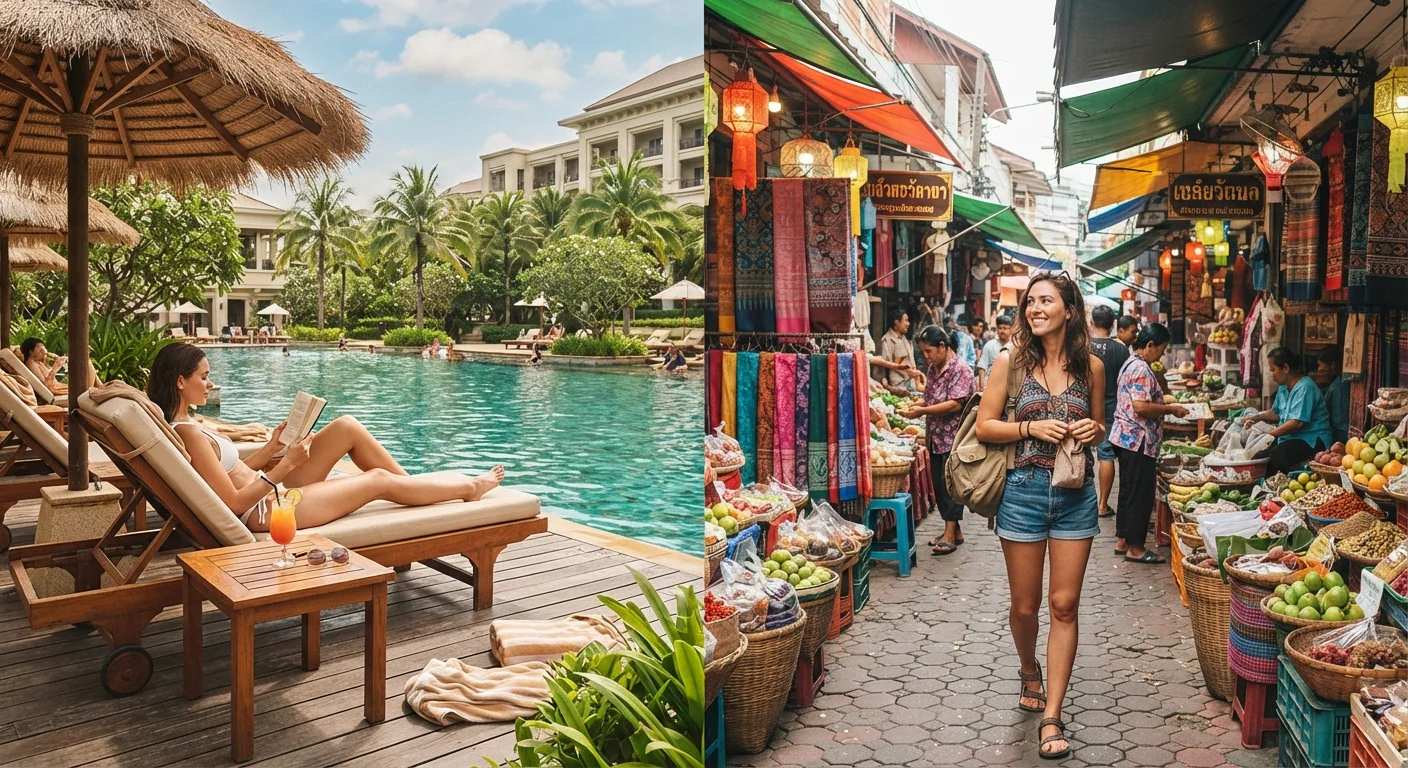
Key Takeaways
- All-inclusive packages trade flexibility for predictability, making budgeting and logistics simpler upfront.
- Independent travel rewards curious, adaptable travelers but requires more planning time and financial discipline.
- Your travel style, group size, and destination type are the most reliable guides for choosing between the two.
- Neither format is objectively superior — the right choice depends on what you actually want from a trip.
Our Verdict
All-inclusive travel shines when simplicity, relaxation, and cost certainty are the priority — particularly for families, couples, or first-time international travelers. Independent travel is the stronger choice for those who want cultural immersion, flexible pacing, and the freedom to follow their curiosity. The honest answer is that many travelers do both, alternating based on the trip at hand.
| Best for | Recommended |
|---|---|
| Families with young children seeking low-logistics vacations | All-Inclusive |
| Travelers who want cultural depth and local experiences | Independent Travel |
| Those working within strict or fixed budgets | All-Inclusive |
| Experienced travelers comfortable with spontaneous planning | Independent Travel |
What You're Actually Comparing
An all-inclusive package bundles accommodation, meals, drinks, and often activities or airport transfers into a single upfront price. You pay once, arrive, and largely stop worrying about costs. Independent travel, by contrast, means you book each component — flights, accommodation, food, transport, activities — separately, on your own timeline and terms.
Neither format is a shortcut or a compromise. They reflect genuinely different philosophies about what travel is for. Before comparing features, it helps to ask one clarifying question: Do you want to rest and recharge, or do you want to explore and discover? The honest answer narrows your decision considerably. For a deeper look at how your destination choice shapes this question, see city breaks versus nature escapes.
How the Two Approaches Stack Up
The clearest way to see the trade-offs is to compare them directly across the factors that matter most to most travelers.
| All-Inclusive | Independent Travel | |
|---|---|---|
| Cost predictability | High — most costs paid upfront | Variable — depends on choices made |
| Planning effort required | Low — one booking covers most needs | High — each element booked separately |
| Cultural immersion | Limited — resort-focused experience | High — direct engagement with locals |
| Flexibility during trip | Low — structure is mostly fixed | High — adjust plans anytime |
| Suitability for families | Very high — programming and meals handled | Moderate — more coordination needed |
| Suitability for solo travelers | Moderate — can feel isolating | Very high — pace is fully self-directed |
| Best destination types | Beach, resort, Caribbean, tropical | Cities, rural areas, multi-country routes |
A few of these rows deserve extra context. Cost predictability is one of the most underrated advantages of all-inclusive travel — once you've paid, surprise expenses are rare. Independent travelers, however, often find they spend less overall if they research local transport and eat where locals eat. Cultural immersion is where independent travel consistently outperforms: staying in neighborhood guesthouses, using local transit, and eating at non-resort restaurants all build richer, more memorable experiences. That said, some all-inclusive resorts are deliberately located near cultural sites, and many now offer curated local excursions as add-ons.
When All-Inclusive Makes Strategic Sense
All-inclusive works best when the goal is rest, not discovery. Families with young children benefit enormously from environments where meals are handled, kids' programming exists, and the boundaries are clear. Couples celebrating anniversaries or honeymoons often prefer the frictionless experience. First-time international travelers frequently find the structure confidence-building — you're not navigating currency, language, and logistics all at once.
All-inclusive also makes sense when you're traveling to a destination where local infrastructure is unfamiliar or where food and water safety are genuine concerns. Having most needs met on-property reduces those variables meaningfully.
Ask the Resort What's Actually Included
All-inclusive packages vary significantly in what they cover. Some exclude premium restaurants, motorized water sports, or off-property excursions. Read the fine print before booking and factor any likely add-ons into your true cost estimate — this prevents sticker shock once you arrive.
If budget certainty is your primary concern, planning your trip around a realistic budget before you book — whether all-inclusive or independent — will give you a clearer picture of true costs either way.
When Independent Travel Is the Stronger Choice
Independent travel rewards those who are genuinely curious about a place — its food, its people, its rhythms. If your ideal day involves wandering a neighborhood without a schedule, eating at a spot you found by asking a local, or adjusting your plans when you stumble on something unexpected, independent travel is built for you.
Solo travelers especially tend to gravitate here. The freedom to move at your own pace, pivot without consulting anyone, and spend according to your own priorities is hard to replicate inside a resort structure. Solo versus group travel planning involves genuinely different logistics — and independent travel aligns naturally with the solo mindset.
Independent travel also opens up destinations that don't have significant all-inclusive infrastructure: smaller towns, rural regions, and countries where accommodation is primarily guesthouses or boutique hotels. Portugal's appeal for independent travelers, for instance, is rooted in exactly this kind of accessible, walkable, self-directed experience.
The trade-off is real, though: independent travel demands planning investment upfront. A well-structured day-by-day itinerary prevents the most common failure mode — arriving without a plan and spending half the trip figuring out logistics on the fly.
Don't Underestimate Independent Travel Costs
Independent travel can cost more than expected when individual bookings aren't researched carefully. Transport between cities, last-minute accommodation, and eating at tourist-facing restaurants all add up quickly. Building a realistic budget with a buffer before you commit to any bookings helps prevent the trip from becoming financially stressful.