

Key Takeaways
- Hard-shell luggage offers superior protection for fragile contents but provides no give if you overpack.
- Soft-shell bags are generally lighter and offer exterior pockets that hard-shells typically lack.
- Hard-shell cases resist water and liquid spills better than most fabric-based soft-shells.
- Soft-shell luggage can compress slightly to fit tighter overhead bins or trunk spaces.
- Both shell types come in carry-on and checked sizes — the right choice depends on your packing habits and trip style.
Option A
Hard-Shell Luggage
The structured, protective choice for frequent flyers.
Best for: Travelers carrying fragile items, electronics, or valuables who prioritize rigid protection and a sleek look.
Option B
Soft-Shell Luggage
The flexible, adaptable choice for versatile packers.
Best for: Travelers who overpack slightly, need exterior pockets, or want a lighter bag for varied trip types.
If you travel with fragile or valuable items
Hard-Shell Luggage
The rigid outer shell absorbs impact during baggage handling, keeping breakables and electronics significantly better protected.
If you tend to pack more than you plan to
Soft-Shell Luggage
Soft shells offer a small degree of flex, and exterior pockets let you redistribute items without reorganizing the entire bag.
If you're traveling through wet or unpredictable climates
Hard-Shell Luggage
Hard-shell exteriors repel surface moisture more effectively, keeping your contents drier in rainy or humid environments.
If you want a lighter bag for frequent short trips
Soft-Shell Luggage
Fabric-construction bags typically weigh less than polycarbonate or ABS shells, leaving more room within airline weight limits.
If you need quick access to items on the go
Soft-Shell Luggage
Exterior zip pockets on soft-shell bags make grabbing documents, chargers, or snacks fast without opening your main compartment.
The Core Difference: Structure vs. Flexibility
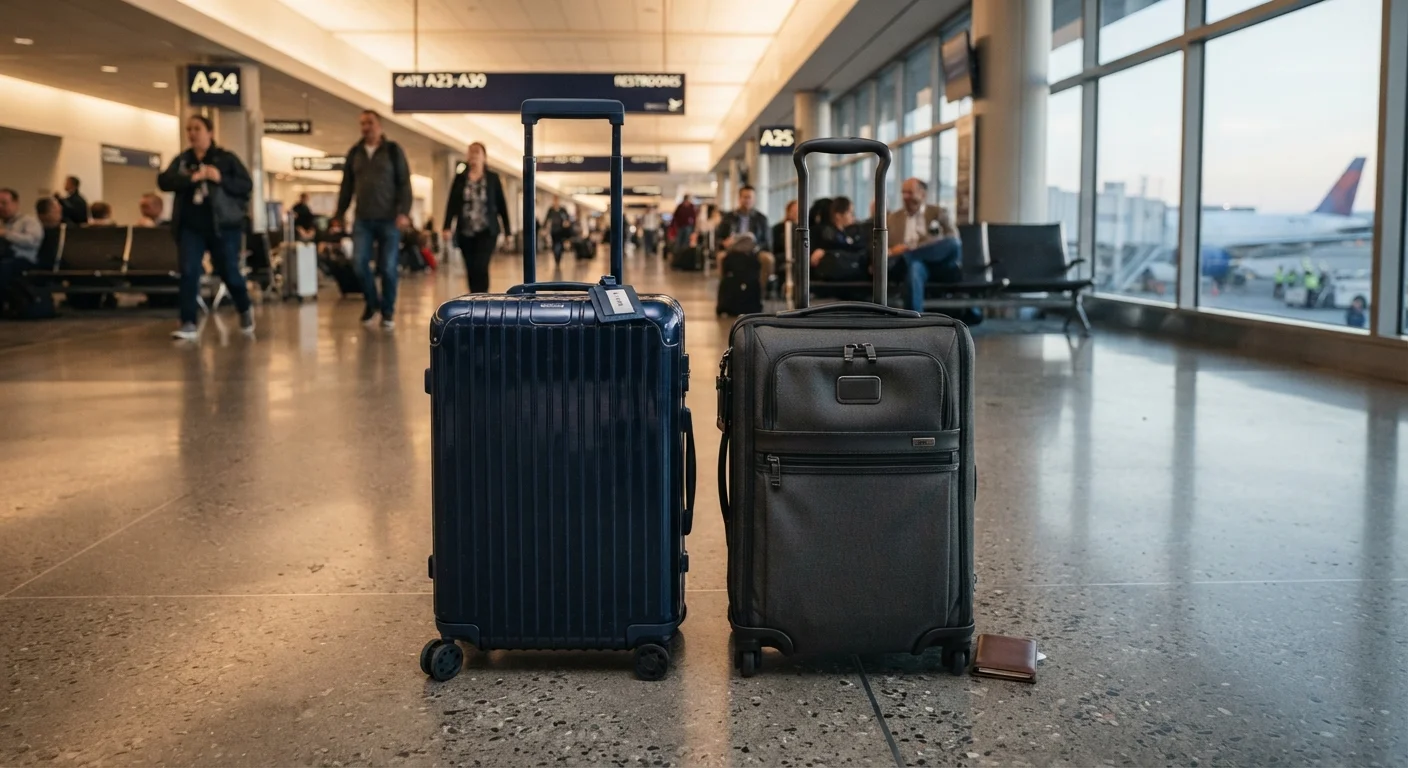
When you're choosing luggage, the shell material isn't just an aesthetic decision — it shapes how your bag performs from curbside to carousel. Hard-shell luggage is constructed from rigid materials like polycarbonate, ABS plastic, or aluminum. Soft-shell luggage uses flexible fabrics such as nylon, polyester, or ballistic weave stretched over an internal frame or none at all.
That fundamental difference in construction creates a cascade of trade-offs across weight, storage, protection, and adaptability. Neither type is universally better — but understanding how each one behaves will help you match the bag to your actual travel habits rather than just its appearance.
For a broader look at how luggage choice intersects with your overall packing approach, see our guide to checked bags vs. carry-ons — the shell type question and the size question are often worth answering together.
| Criterion | Hard-Shell Luggage | Soft-Shell Luggage |
|---|---|---|
| Material | Polycarbonate, ABS, or aluminum | Nylon, polyester, or ballistic fabric |
| Impact protection | High — rigid shell deflects force | Moderate — fabric absorbs some shock |
| Weight | Generally heavier | Generally lighter |
| Water resistance | Strong — repels surface moisture | Variable — depends on fabric coating |
| Exterior pockets | Rarely included | Common on most designs |
| Packing flexibility | Fixed capacity — no compression | Slight flex; easier to overstuff |
| Overhead bin fit | Fixed shape — must fit exactly | Can compress slightly to fit |
| Scratch visibility | Scratches show on glossy finishes | Fabric hides wear more naturally |
Protection, Weight, and What Actually Survives Baggage Handling
Hard-shell cases earn their reputation in one area above all: impact resistance. When a checked bag is stacked under heavier luggage or tossed onto a conveyor, a rigid shell distributes that force across its surface rather than transferring it directly to your belongings. This matters most when you're packing cameras, bottles, or anything that doesn't bounce back from pressure.
Soft-shell bags, by contrast, absorb some shock through the fabric itself — but the real difference is what's inside them. Because soft-shells have no rigid walls, a heavy item pressing against the exterior can still deform the bag. That said, soft materials are generally more forgiving in overhead bins, where a slight squeeze can mean the difference between fitting or gate-checking your bag.
~1–2 lbs
Typical weight difference between shell types
A standard carry-on hard-shell often weighs 1–2 lbs more than a comparable soft-shell, which can matter when airlines enforce strict weight limits.
62 linear inches
Standard US checked bag size limit
Most major US carriers cap checked luggage at 62 linear inches (length + width + height); both shell types are available in compliant sizes, but fixed hard-shell dimensions leave no flexibility.
Weight is another genuine consideration. Polycarbonate and ABS shells add meaningful grams — sometimes 1–2 lbs over a comparable soft-shell. On trips where you're already close to a checked baggage weight limit, that difference adds up. If packing light is a priority, our practical packing strategies article covers techniques that work well with either shell type.
Storage Layout, Accessibility, and Packing Compatibility
One of the most practical distinctions between hard and soft shells is how you access your gear on the move. Most hard-shell suitcases open clamshell-style into two equal halves — great for organized packing, but it means you need floor space every time you open the bag. There are no exterior pockets; everything lives inside.
Soft-shell bags commonly feature front zip pockets, side water bottle sleeves, and top handles with pass-through compartments. For travelers who need to grab a passport, earbuds, or a jacket without unpacking, this accessibility is a real advantage.
If you're pairing your main bag with a smaller under-seat option, our daypack vs. personal item bag comparison can help you think through the full luggage system — not just the suitcase itself.
Expandable Soft-Shells: Worth Understanding
Many soft-shell suitcases include an expandable zipper that adds 1–2 inches of depth to the main compartment. This is genuinely useful for return trips when you've acquired souvenirs or picked up extra gear. Hard-shell bags almost never offer this feature, so if you tend to come home with more than you left with, that expandability may be worth factoring into your choice.
Packing style also interacts with shell type. Rollers and cubes work well in both, but hard-shell bags benefit more from compression systems since the rigid walls don't give. For more on how packing approach varies by trip type, see packing strategies that adapt across trip types.