

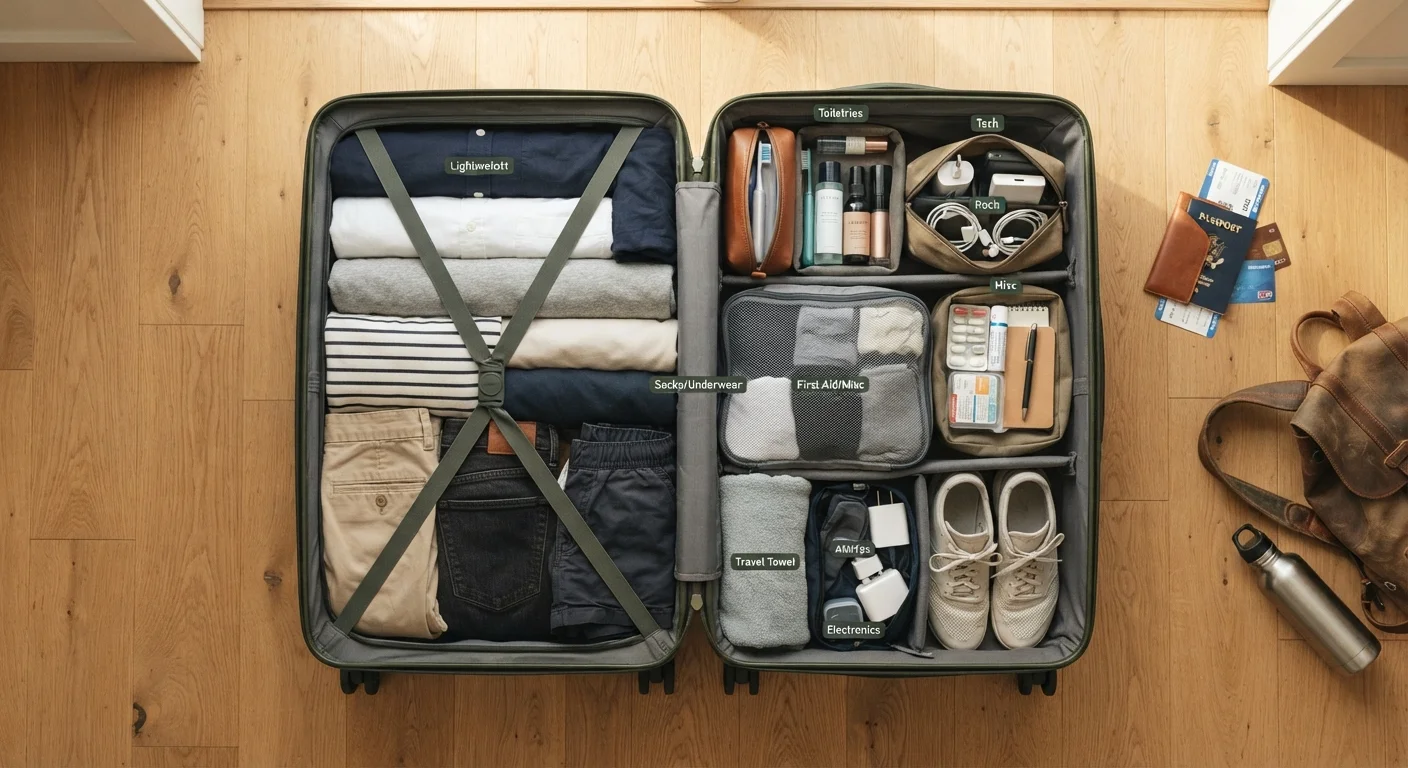
Key Takeaways
- Activity-based packing means choosing items by what you'll do, not just where you'll go.
- Versatile, neutral clothing pieces reduce overall volume without sacrificing function.
- A consistent packing framework helps you adapt faster to any trip type.
- Toiletries and tech are the easiest categories to over-pack — audit them first.
- Rolling, layering, and category-based organization all reduce wrinkles and wasted space.
Why Trip Type Should Drive Your Packing Logic
Most packing frustrations come from applying the same instincts to every trip. A beach vacation and a business conference look nothing alike in the bag — yet many travelers reach for the same overstuffed duffel regardless. The smarter starting point is asking: what will I actually be doing, and what does that activity demand?
Trip type determines weight priorities, bag shape, clothing function, and even how you'll access items during the day. A hiker needs gear near the top; a business traveler needs wrinkle-free layers protected in the middle. Understanding this upfront saves you from packing remorse at the airport. For a broader view of how packing fits into the full planning process, see The Anatomy of a Well-Planned Trip.
Core Practices That Travel Well Across All Trip Types
Certain principles hold up whether you're heading to a trailhead, a boardroom, or a resort pool. These aren't packing hacks — they're structural habits that make every departure calmer and every bag more functional.
Build your clothing list around activities, not calendar days
Packing one outfit per day almost guarantees over-packing. When you organize by activity — travel day, active outing, evening, downtime — you immediately spot redundancies and can identify pieces that work across multiple contexts.
Anchor your wardrobe around two or three base colors
A limited color palette allows every item to mix and match, multiplying outfit options without multiplying volume. This strategy is especially useful for longer or multi-destination trips where re-wearing is inevitable.
Designate a consistent zone in your bag for daily-access items
Digging through a fully packed bag in an airport or trailhead parking lot wastes time and disrupts your organization. A predictable spot for travel documents, snacks, a layer, and your phone charger means you're never repacking mid-trip.
Treat your toiletry kit as a fixed, pre-packed unit
Rebuilding your toiletry bag from scratch before each trip leads to forgotten items and inflated quantities. A permanent travel kit stocked with travel-size staples removes the guesswork and keeps volume in check.
Apply a weight limit before you start, not after
Most over-packing happens because there's no constraint at the outset. Setting a target weight or committing to a specific bag size forces tougher decisions upfront, before you've already mentally committed to bringing everything.
For more approaches that complement these fundamentals, explore packing strategies worth knowing before your next trip — including the capsule wardrobe method and rolling versus folding comparisons.
Quick Wins to Apply Before Your Next Trip
You don't need to overhaul your entire packing routine at once. A few targeted changes this trip can make a real difference in how your bag feels and functions.
If you're heading somewhere with dramatic weather swings, Packing for Every Climate in One Suitcase covers layering strategies and fabric choices that handle heat, cold, and rain in a single bag.
Where Travelers Most Often Over-Pack
Two categories account for the majority of unnecessary weight: toiletries and technology. Travelers routinely pack full-size products for three-night trips and bring every cable, charger, and adapter they own — just in case.
The 'Just in Case' Problem
Most excess weight in a travel bag comes from items packed for scenarios that rarely occur. Before adding any 'just in case' item, ask whether it's genuinely likely to be needed and whether you could purchase or borrow it at your destination. In most urban and resort destinations, the answer to the latter is yes.
The fix is applying the same activity-based logic to these categories. What will you actually plug in? What grooming routine will you realistically maintain? Most travelers find that a strict audit of these two areas alone drops their bag weight noticeably.
For items that genuinely earn their place — the overlooked gear that travelers regret skipping — see Gear Travelers Consistently Overlook Until They Need It.
One Bag Rule Worth Trying
For any trip under five days, challenge yourself to fit everything into a single carry-on or daypack. The constraint forces smarter decisions about what's truly necessary — and you'll skip baggage claim on both ends of the trip.
New to packing light altogether? Packing Light for a Two-Week Trip offers a grounded starting point for anyone who worries about feeling underprepared with a smaller bag.