

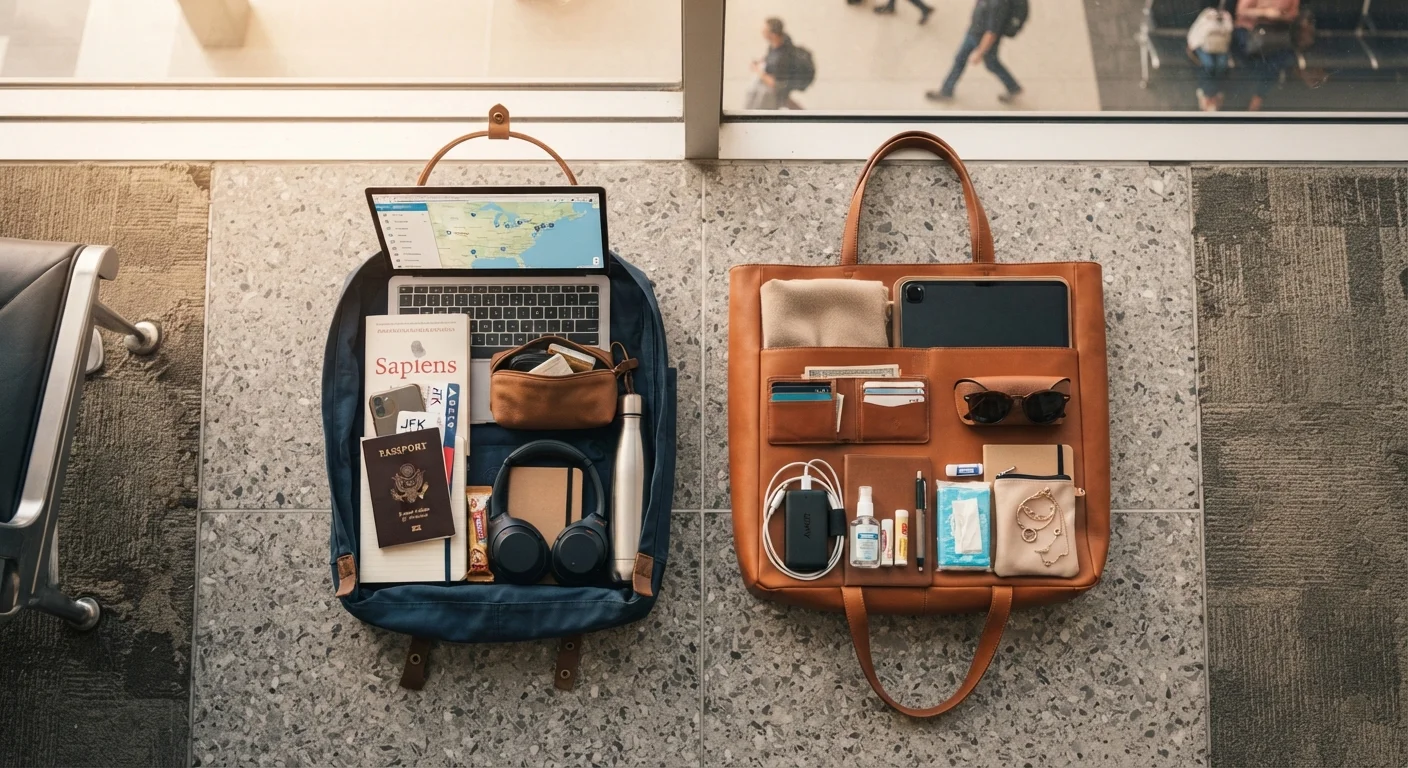
Key Takeaways
- Daypacks offer more volume and flexibility but may lack structure and quick-access pockets.
- Structured personal item bags prioritize organization and upright stability under the seat.
- Airline personal item size limits vary — always check your carrier's dimensions before packing.
- Your trip length, activity level, and carry-on setup should all influence which bag you choose.
- Neither option is universally superior; the right pick depends on how you actually travel.
Our Verdict
Both daypacks and structured personal item bags can serve as excellent under-seat companions — the difference comes down to how you use the bag on the ground. If you plan to explore on foot after landing, a daypack gives you versatile carrying capacity. If you need quick, organized access to travel essentials during a busy day of connections, a structured personal item bag earns its keep.
| Best for | Recommended |
|---|---|
| Active travelers exploring on foot or hiking after landing | Daypack |
| Frequent flyers who prioritize organization and quick access | Structured Personal Item Bag |
| Carry-on-only travelers needing maximum packing capacity | Daypack |
| Business travelers or those with multiple short connections | Structured Personal Item Bag |
Why Your Personal Item Choice Matters More Than You Think
Your personal item slot is arguably the most overlooked real estate in travel planning. While most attention goes to the carry-on or checked bag, the bag that slides under the seat in front of you is the one you'll actually live out of during your flight — and often for the first few hours at your destination.
The core question most travelers face: should you bring a flexible daypack or a structured personal item bag? Both fit within most airlines' personal item allowances, but they behave very differently in practice. Understanding those differences helps you travel lighter and smarter — something worth pairing with solid packing strategies before any trip.
| Daypack | Structured Personal Item Bag | |
|---|---|---|
| Typical volume range | 10–25 liters | 15–20 liters (fixed shape) |
| Organization & pockets | Minimal, mostly one main compartment | Multiple quick-access front pockets |
| Comfort for all-day carry | Excellent (padded shoulder straps) | Moderate (shoulder strap only) |
| Stands upright independently | Rarely | Yes, structured base |
| Fits under airline seat | Yes, if within size limits | Designed specifically for this |
| Best use case | Active exploration, carry-on only trips | Multi-leg travel, organized access |
What a Daypack Brings to the Table
A daypack is typically a soft-sided backpack ranging from about 10 to 25 liters. The defining advantage is volume — you can stuff in a packable rain jacket, a change of clothes, a water bottle, and a camera without breaking a sweat. When you land in a new city and head straight out to explore, that hauling capacity is genuinely liberating.
Daypacks also tend to distribute weight comfortably across both shoulders, which matters on long walking days. Many travelers use their daypack as the sole bag on weekend trips, skipping the overhead bin entirely. If you're curious about specific packable styles, what "packable" actually means is worth a read before you shop.
The tradeoffs? Most daypacks have minimal internal structure, which means finding your passport or earbuds mid-flight often involves digging. They also don't stand upright on their own, which can be frustrating in tight boarding-line situations.
Check Airline Dimensions First
Personal item size limits vary by carrier — some allow up to 18 x 14 x 8 inches, while budget airlines can be stricter. Measure your bag and compare it against your specific airline's published guidelines before you fly. A bag that fits one airline's policy may be flagged by another.
Where Structured Personal Item Bags Shine
Structured personal item bags — sometimes called travel totes or under-seat bags — are engineered specifically to maximize the under-seat space footprint. They're typically rectangular, stand upright, and feature front-access pockets designed for passports, boarding passes, phones, and cords. That intentional organization pays dividends during security, boarding, and mid-flight rummaging.
These bags often include a luggage sleeve that slides over a rolling carry-on handle, keeping your setup streamlined through long terminals. If you're also thinking through your larger bag situation, comparing hard-shell vs. soft-shell luggage can round out your kit decisions.
The limitation is that structured bags aren't built for on-the-ground adventure. Carrying one over your shoulder for a full day of sightseeing gets uncomfortable fast, and their rigid shape means less adaptability when you're shoving in a souvenir or extra layer.
Don't Rely on "Fits Under the Seat" Marketing Claims
Some bags are marketed as personal item-compliant but are sized for larger aircraft with more generous under-seat clearance. Regional jets and smaller planes have significantly tighter under-seat spaces. When in doubt, opt for a bag on the smaller end of your airline's stated dimensions to avoid having to gate-check at the last minute.
How to Decide What's Right for Your Trip
The best approach is to think through three questions before you pack: How many days are you traveling? What's your activity plan on arrival? And how are you handling your larger luggage?
- Short trip, carry-on only: A daypack lets you maximize every liter of space and doubles as your sightseeing bag.
- Multi-leg journey with layovers: A structured personal item bag keeps essentials accessible without opening your whole bag at every gate.
- Checked luggage situation: Either option works — but a structured bag pairs neatly with a rolling carry-on in the overhead.
- Outdoor or active itinerary: A daypack's comfort straps and capacity make it the clear choice once you hit the trail or the streets.
It's also worth reviewing gear travelers consistently overlook — some items (like compression socks or portable chargers) may actually influence which bag style fits your needs. For a broader view of how all your gear fits together, the complete guide to packing and travel gear is a helpful starting point.