

Key Takeaways
- Most first-timers pack twice what they actually need — and feel it in their shoulders.
- A versatile capsule wardrobe of 5–7 pieces can cover two weeks of real travel.
- Doing laundry once mid-trip is easier and lighter than packing for every single day.
- Carry-on only travel eliminates checked bag fees and baggage claim waiting time.
- Fabric choice matters: quick-dry, wrinkle-resistant materials make light packing more practical.
- Checking a destination's laundry options beforehand removes the biggest barrier to packing light.
Start here
Why Packing Light Changes Everything
Build the foundation
The Core Mindset Shift
Plan your clothes
Building Your Two-Week Wardrobe
Fill in the rest
Toiletries, Tech, and Everything Else
Ready to pack
Putting It All Together
Why Packing Light Changes Everything
There's a moment most first-time travelers share: standing in the airport with an overstuffed bag, regretting every item they thought they'd need. Packing light isn't a sacrifice — it's a skill that makes the entire trip smoother, cheaper, and more spontaneous.
Carry-on only travel means no checked bag fees, no waiting at baggage claim, and the freedom to change plans without dragging a massive suitcase up cobblestone streets. If you're still working out the broader shape of your trip, our first-timer's trip planning guide is a good place to start before you think about what to pack.
Test Your Bag Before You Leave
Pack your bag completely a day or two before your trip and walk around with it for 15–20 minutes. This reveals whether it's too heavy and gives you time to remove items without the pressure of an imminent departure. It also confirms everything actually fits the way you planned.
The Core Mindset Shift
The single biggest change isn't in your bag — it's in how you think about clothing. Most people pack by listing every possible scenario: a nicer outfit in case of a fancy dinner, a backup pair of shoes in case of rain, extra layers just in case. This "what if" thinking is what fills bags to bursting.
Light packing asks a different question: What's the minimum that covers what I'll actually do? It also accepts one practical truth — laundry exists everywhere. Doing a single load of laundry mid-trip means you only need clothes for roughly seven days, not fourteen. That's the foundation everything else builds on.
Capsule wardrobe
A small, coordinated set of clothing items that all work together in multiple combinations, reducing the number of pieces you need while maximizing outfit options.
Carry-on only travel
A packing approach where everything fits in a bag small enough to bring into the airplane cabin, avoiding checked luggage entirely.
Quick-dry fabric
Fabric made from materials like nylon or polyester blends that dry much faster than cotton, making hand-washing practical even overnight.
Merino wool
A natural fiber from Merino sheep that resists odor, regulates temperature, and resists wrinkles — popular with minimalist travelers for its versatility.
Packing cubes
Small zippered fabric pouches used to organize and compress clothing inside a bag, making it easier to find items and fit more efficiently.
Building Your Two-Week Wardrobe
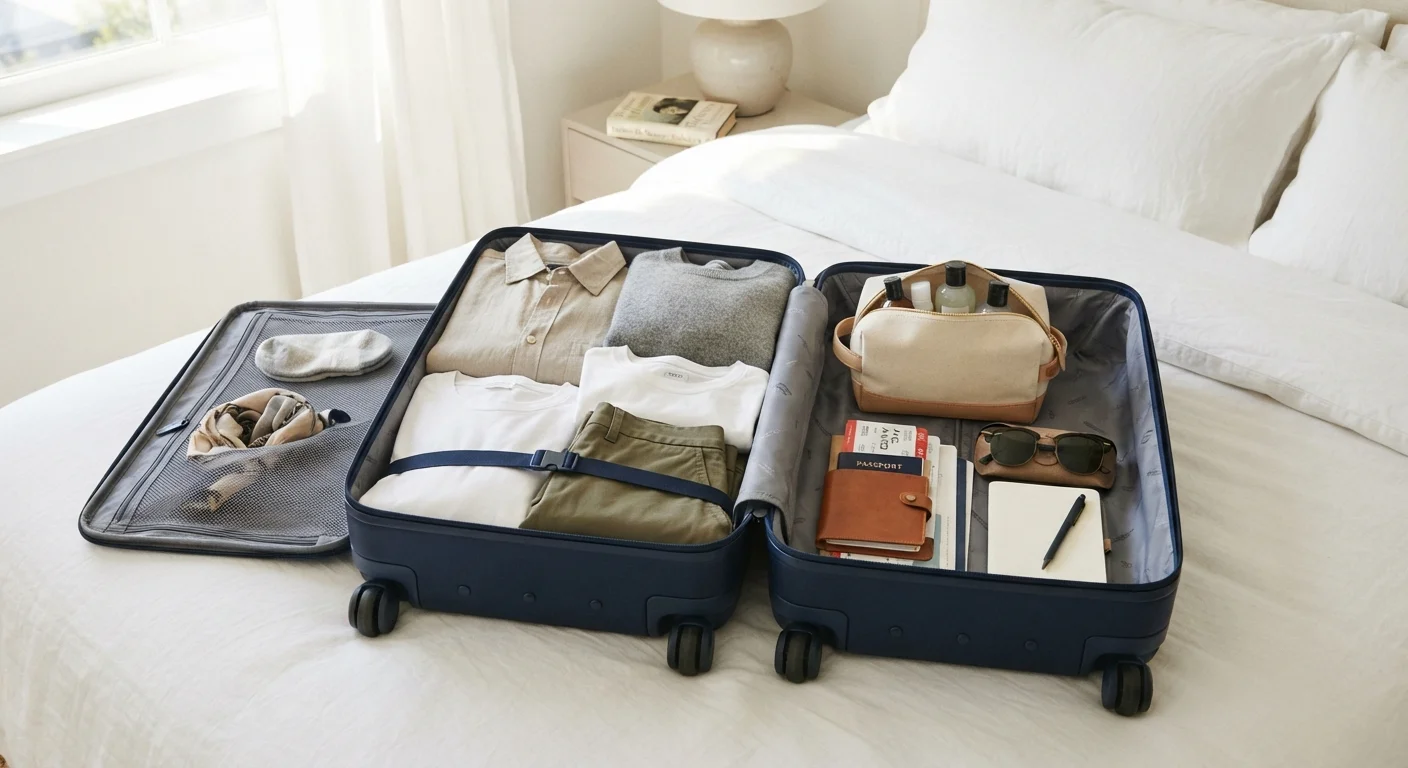
A functional two-week travel wardrobe typically comes down to 5–7 clothing items that mix and match. A workable starting framework looks like this:
- Bottoms (2–3): One pair of versatile pants and one or two shorts or skirts, depending on your destination.
- Tops (3–4): Choose neutral or complementary colors so every top pairs with every bottom.
- Layer (1): A lightweight jacket or cardigan that handles both cool evenings and overly air-conditioned spaces.
- Shoes (1–2 pairs): Wear the bulkier pair while traveling; pack one compact backup if genuinely needed.
Fabric matters enormously here. Quick-dry, wrinkle-resistant materials — merino wool, nylon blends, and moisture-wicking synthetics — stay fresher longer and dry overnight after hand-washing. For destinations with dramatic weather swings, layering strategies for varied climates can help you refine your choices further.
Don't Rely on Packing for Every Scenario
The instinct to pack for unlikely situations — a formal event, an unexpected cold snap, a beach day you might not take — is the primary cause of overpacking. Focus on what your itinerary actually includes. For genuine unknowns, consider whether a local purchase or a flexible plan is more realistic than filling your bag with possibilities.
Toiletries, Tech, and Everything Else
After clothes, toiletries and tech are the next places bags quietly balloon. A few principles help keep both categories lean:
Toiletries
Most destinations sell standard toiletries locally — shampoo, conditioner, and body wash are almost universally available. Unless you rely on a specific product that's genuinely hard to find, consider buying basics on arrival. For what you do bring, 3 oz (100ml) travel-size containers cover most needs and stay within standard carry-on liquid rules. Verify current liquid restrictions with your airline and the relevant government authority before flying, as these rules can change.
Tech
Bring only tech you'll realistically use daily. A phone, earbuds, one universal adapter, and a portable charger cover most travelers' needs. Every additional cable and gadget adds weight and decision fatigue when you're packing up to move between cities.
For a detailed look at organizing everything inside your bag, the complete guide to packing and travel gear goes deep on bag choice, organization systems, and gear selection.
Putting It All Together
Before you zip up, run one final check: lay everything out and ask whether each item earns its place. If something only works for a single outfit or a single scenario you're not certain will happen, it's a candidate to leave behind.
Pack your bag completely, then lift it. If it's uncomfortable to carry for ten minutes, it's too heavy — and you'll be carrying it a lot longer than ten minutes. Aim for a total bag weight that feels genuinely manageable, not just technically possible.
For shorter reference as you go, the weekend trip packing checklist is useful for day-of double-checking. And if your trip involves destinations with very different activity demands — beach days, city walking, or outdoor hiking — packing strategies that adapt across trip types covers how to approach those combinations. Packing light takes practice, but most travelers find that after one successful carry-on trip, they never want to check a bag again.