

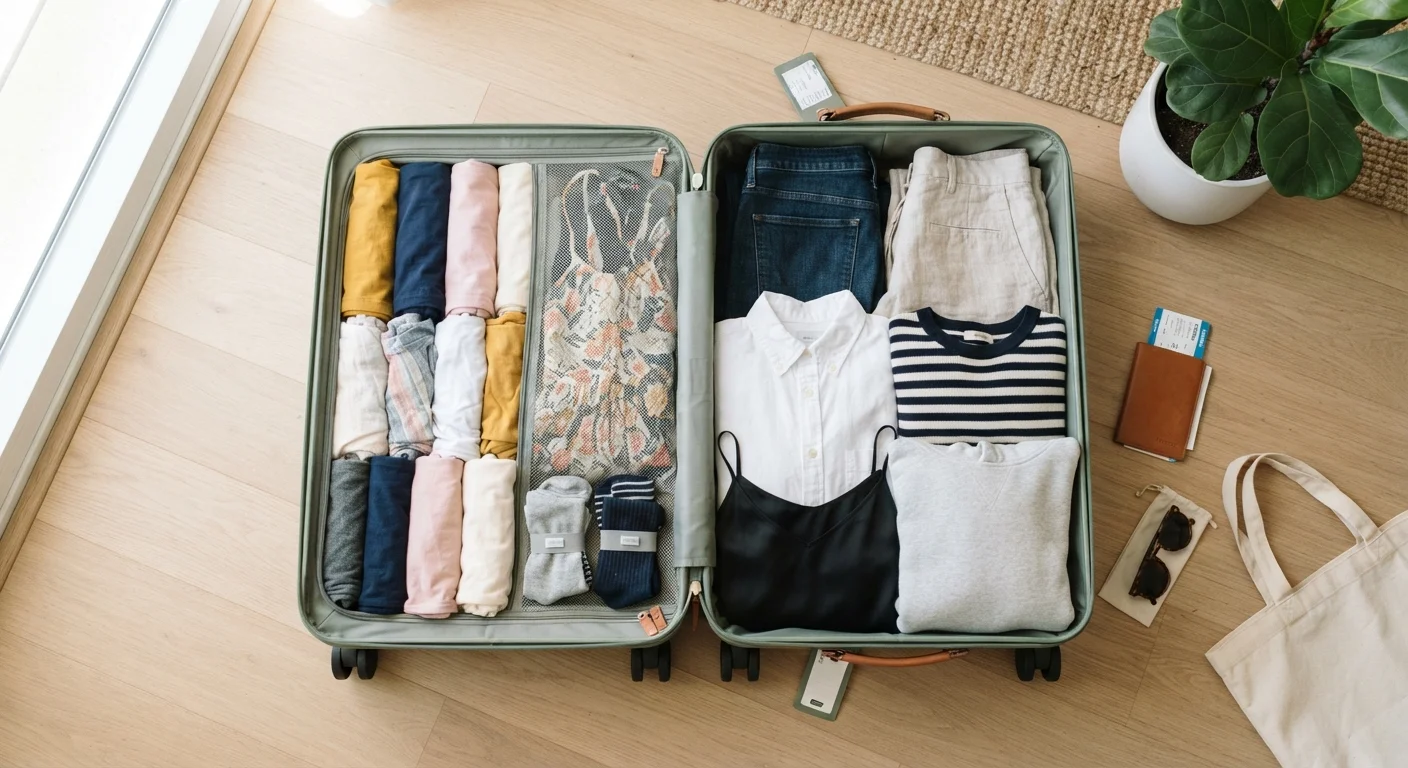
Key Takeaways
- Rolling saves space for casual fabrics but can worsen wrinkles in structured or formal clothing.
- Folding remains the best method for dress shirts, blazers, and stiff-collared garments.
- The bundle-wrapping method reduces wrinkles overall but requires repacking every time you need something.
- Fabric type and trip length matter more than any single packing technique.
- Combining methods—rolling some items, folding others—often outperforms committing to one approach.
The Rolling-Everything Myth
Somewhere along the way, rolling clothes became the de facto packing advice handed out in every travel forum and listicle. And to be fair, rolling genuinely works well—for certain things. T-shirts, leggings, jeans, and casual knitwear roll beautifully, compress efficiently, and unpack without obvious creasing. But that doesn't mean rolling is universally superior.
The problem is when travelers roll everything—including dress shirts with stiff collars, blazers, linen trousers, and woven button-downs. These fabrics and constructions actively resist rolling. You end up with a cylinder of compressed fabric that springs open with a fresh set of wrinkles you didn't have before. For a business trip or a wedding weekend, that's a real issue.
See our full breakdown of packing strategies for a wider look at when each approach makes practical sense.
Myth
Rolling your clothes always saves more space than folding.
Fact
Rolling saves space with soft, casual fabrics but not necessarily with structured or thick garments, which can take up more room when rolled.
The space-saving claim is true in specific circumstances—mainly when dealing with t-shirts, underwear, shorts, and lightweight layers. But bulky sweaters, denim jackets, and tailored pieces don't compress neatly into rolls. You can end up with awkward lumps that waste corner space instead of using it efficiently.
Myth
Rolled clothes come out wrinkle-free, while folded clothes always wrinkle.
Fact
Rolling can introduce its own wrinkles, particularly along the edges of structured fabrics. Folding along seam lines often produces fewer creases for dress garments.
Wrinkle formation depends on fabric weave, fiber type, and how tightly the garment is packed—not just whether it was rolled or folded. A dress shirt rolled tightly will emerge with a spiral crease pattern. The same shirt folded carefully and placed flat on top of other items may arrive in significantly better shape.
Myth
One packing method works for every type of trip.
Fact
Trip length, climate, garment types, and bag shape all influence which packing method—or combination of methods—is most effective.
A backpacking trip through hostels calls for different priorities than a destination wedding weekend. The former rewards roll-everything efficiency and easy access; the latter demands wrinkle management above all. Experienced travelers typically mix techniques based on what's in their bag that trip, not a fixed habit.
Myth
Packing cubes work best exclusively with rolled clothes.
Fact
Packing cubes work with both rolled and folded items; the organizational benefit is about compartmentalization, not packing method.
Cubes are containers that help you categorize and compress contents—they don't prescribe a folding style. Many travelers fold items flat inside cubes designed for shirts and blazers, while using separate cubes for rolled casual pieces. The cube's value is in grouping and compression, regardless of what's inside.
Myth
Heavier clothes should always go at the bottom of your bag.
Fact
Weight placement depends on bag type: in wheeled luggage, heavier items go near the wheels; in a backpack or carry-on, they go closest to your back for balance.
The blanket rule to 'put heavy things on the bottom' breaks down because 'bottom' means different things for different bags. In a backpack, the back panel is the structural anchor—that's where dense items like shoes or electronics belong. In a rolling suitcase, the wheel end bears the load. Misplacing weight can make bags harder to maneuver and increases the risk of stress on zippers and seams.
What Each Method Actually Does Well
Understanding the strengths of each technique helps you make smarter decisions without defaulting to blanket rules.
- Rolling excels with soft, stretchy, or casual fabrics. It maximizes space in cylindrical corners of bags and works especially well inside packing cubes. Learn more about how those fit into the equation with our guide to packing cubes.
- Flat folding is the right call for structured garments—blazers, collared shirts, tailored trousers. Fold along existing seams, and you're working with the garment's construction rather than against it.
- Bundle wrapping (layering clothes around a core item in concentric wraps) is the most wrinkle-resistant method overall, but it makes mid-trip access nearly impossible without disassembling the entire bundle.
For travelers committed to carry-on only, mastering these distinctions becomes critical. Our article on the carry-on only mindset walks through how seasoned light packers think about exactly this.
30–40%
Space savings from rolling soft garments
Travel organization experts generally estimate that rolling casual fabrics can reduce the volume they occupy by roughly 30–40% compared to standard flat folding.
~60%
Travelers who mix packing methods
Informal surveys of frequent travelers consistently find that the majority use a combination of rolling and folding rather than committing to a single technique.
Matching the Method to the Trip
A weekend beach trip calls for almost entirely rolled items. A week-long conference itinerary mixing business and evening dinners needs a hybrid approach: rolled casualwear at the base, flat-folded dress pieces layered on top, and delicate items placed last. A long international trip where you'll be living out of your bag for weeks might favor rolling and cubes simply because accessibility matters more than perfect presentation.
Fabric matters just as much as garment type. Merino wool is remarkably resilient whether rolled or folded. Cotton wrinkles readily regardless of method, so strategy matters less than steaming on arrival. Synthetics and polyester blends are forgiving either way. Before you pack, a quick fabric check can save you a lot of frustration at check-in.
Also consider your bag's shape. A wide, rectangular suitcase accommodates flat folding well. A tall, narrow duffel or backpack favors vertical rolls. The luggage itself often determines which method is physically practical. Our checked bag vs. carry-on guide covers how bag choice affects the entire packing equation.
Don't Forget Fabric Care Labels
Some delicate fabrics—silk, wool blends, structured suiting—can be damaged by tight rolling or over-compression. Always check garment care instructions before deciding how to pack a piece. Items that wrinkle badly or require dry cleaning deserve extra care, such as a garment bag or careful flat layering rather than any rolling method.