

Key Takeaways
- Packing cubes organize your bag but don't meaningfully compress clothing to create extra space.
- They work best for multi-stop trips, group travel, or anyone who unpacks and repacks frequently.
- Compression cubes are a distinct product—they actually reduce garment volume when sealed.
- For short or simple trips, packing cubes may add unnecessary weight and complexity.
- The right system depends on your packing style, not a one-size-fits-all rule.
Instant organization across multiple trip segments
Grouping clothing by category or day means you can find what you need without unpacking everything. This pays off most on multi-stop itineraries where you're repeatedly accessing your bag.
Faster airport security and bag checks
When TSA agents or customs officers need to inspect your bag, cubed items stay grouped and are easier to repack quickly rather than being strewn across the conveyor.
Separates clean from worn clothing
Designating one cube for worn clothes keeps dirty items contained and away from clean ones—a simple but genuinely useful feature on longer trips.
Reduces chaos in soft-sided bags
Backpacks and duffel bags lack the rigid structure of hard-shell suitcases. Cubes effectively create internal walls, keeping clothes from shifting into a tangled pile.
Add weight without adding packing space
Standard cubes don't compress clothing—they just reorganize it. If your bag is already full, cubes won't solve the problem and will actually cost you a few extra ounces.
Can encourage overpacking
Having dedicated cubes for categories like 'tops' or 'bottoms' can subconsciously signal that each one should be filled. This is a subtle but documented packing trap.
Extra step for simple or short trips
A one-night or two-night trip rarely warrants a cube system. The time spent packing into cubes likely exceeds any organizational benefit for brief getaways.
Compression cubes may damage delicate fabrics
The pressure applied when sealing compression cubes can crease or stress finer materials. Silk, linen, and structured blazers are better rolled or laid flat without compression.
Our Verdict
Packing cubes are a genuinely useful organizational tool—not a revolutionary packing hack. They shine when your trip involves multiple stops, shared luggage, or a need to access specific items quickly. For minimalist packers or weekend trippers, they can feel like overkill.
Travelers who move between multiple destinations, pack for several activities at once, or simply want less chaos when digging through a bag will get the most value from packing cubes.
What Packing Cubes Actually Do
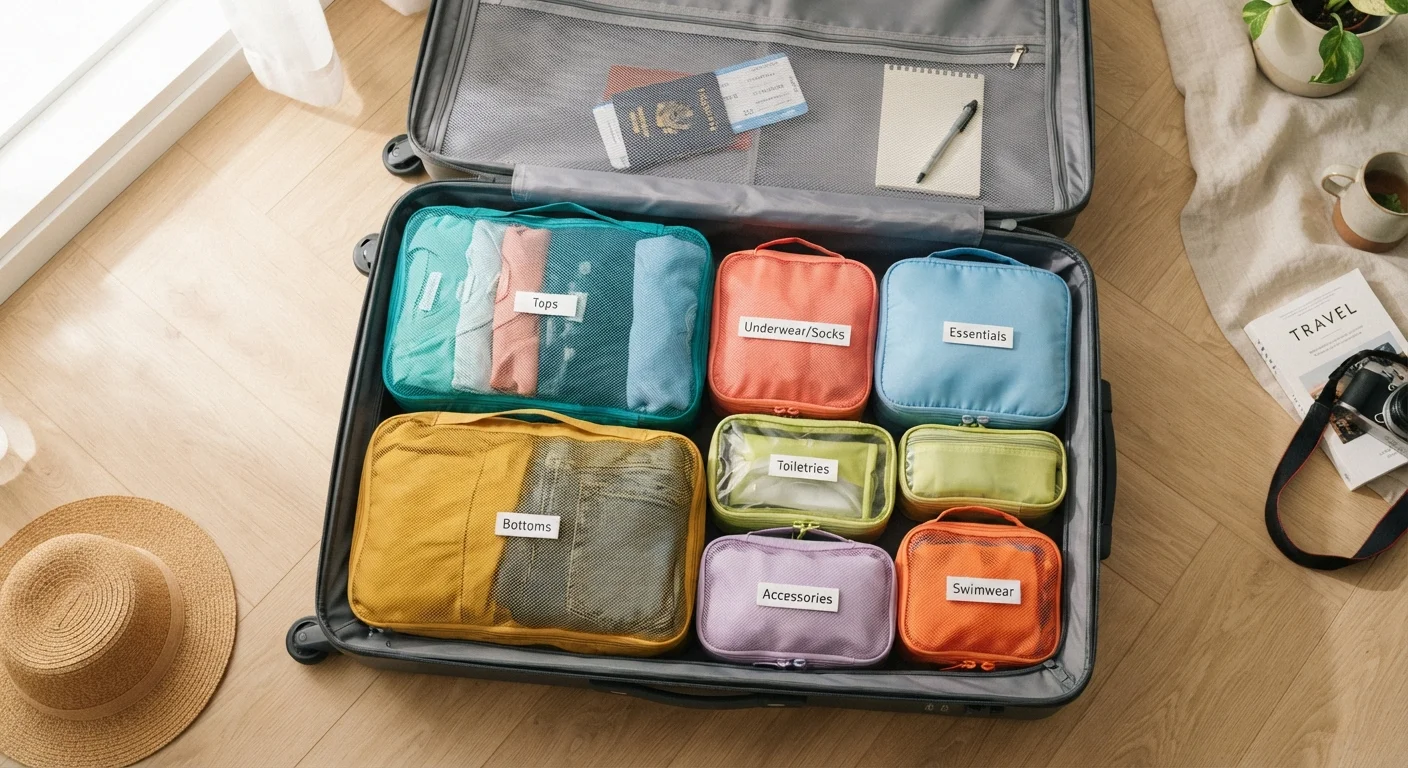
Packing cubes are rectangular zippered pouches—typically made from lightweight nylon or mesh—designed to compartmentalize clothing and accessories inside a bag. You group items into cubes (shirts in one, bottoms in another, for example), zip them closed, and stack them in your luggage like building blocks.
The core benefit is organization, not compression. Standard packing cubes don't make your clothes smaller; they make them easier to locate and manage. Think of them as drawers inside your bag. When you open your suitcase at a hotel, everything is already sorted rather than jumbled together.
Compression cubes are a related but distinct product. They feature a double zipper that, when fully closed, pushes air out of the pouch and reduces garment bulk. These do create measurable space savings—useful if you're trying to cram a week's worth of clothes into a carry-on. Worth noting: compression doesn't mean wrinkle-free. Densely packed garments will still crease. See how folding vs. rolling affects wrinkles for more on that tradeoff.
Compression Cubes vs. Standard Cubes
Standard packing cubes and compression packing cubes are often marketed similarly, but they work differently. Standard cubes organize; compression cubes reduce volume by expelling air through a secondary zipper seal. If space-saving is your main goal, look specifically for compression-style cubes. If organization is the goal, standard mesh or nylon cubes are lighter and less expensive. Knowing which problem you're solving helps you choose the right tool.
The Real Pros of Using Packing Cubes
Packing cubes offer genuine advantages in specific travel scenarios.
Instant organization across multiple trip segments
Grouping clothing by category or day means you can find what you need without unpacking everything. This pays off most on multi-stop itineraries where you're repeatedly accessing your bag.
Faster airport security and bag checks
When TSA agents or customs officers need to inspect your bag, cubed items stay grouped and are easier to repack quickly rather than being strewn across the conveyor.
Separates clean from worn clothing
Designating one cube for worn clothes keeps dirty items contained and away from clean ones—a simple but genuinely useful feature on longer trips.
Reduces chaos in soft-sided bags
Backpacks and duffel bags lack the rigid structure of hard-shell suitcases. Cubes effectively create internal walls, keeping clothes from shifting into a tangled pile.
Multi-destination trips are where cubes earn their keep most clearly. When you're moving every two or three nights, being able to pull out a single cube rather than repacking your whole bag saves real time and frustration. The same logic applies to family or group travel, where different travelers' items can easily get mixed together in shared luggage.
Where Packing Cubes Fall Short
Despite the enthusiastic endorsements you'll find online, packing cubes aren't a universal solution.
Add weight without adding packing space
Standard cubes don't compress clothing—they just reorganize it. If your bag is already full, cubes won't solve the problem and will actually cost you a few extra ounces.
Can encourage overpacking
Having dedicated cubes for categories like 'tops' or 'bottoms' can subconsciously signal that each one should be filled. This is a subtle but documented packing trap.
Extra step for simple or short trips
A one-night or two-night trip rarely warrants a cube system. The time spent packing into cubes likely exceeds any organizational benefit for brief getaways.
Compression cubes may damage delicate fabrics
The pressure applied when sealing compression cubes can crease or stress finer materials. Silk, linen, and structured blazers are better rolled or laid flat without compression.
The weight consideration is real: a full set of cubes can add anywhere from a few ounces to nearly half a pound to your bag—meaningful if you're flying carry-on only with a tight weight limit. And cubes introduce a layer of friction: every time you need a single item, you're opening and re-closing a pouch. For travelers who live out of their bag rather than unpacking, that can feel inefficient. Overpacking patterns can also get worse with cubes—more compartments can feel like permission to fill them.
Who Should and Shouldn't Use Them
The honest answer is that packing cubes are a system preference, not a travel requirement. They work well for:
- Travelers visiting multiple cities on one trip
- Anyone who unpacks fully into hotel drawers and repacks to leave
- Packers who carry gear for mixed activities (hiking, city days, a dinner out)
- Parents managing kids' clothing in a shared bag
They're probably not worth it if you're taking a simple weekend trip, already pack light by instinct, or travel with a very small bag where cube structure adds more bulk than benefit. If you're working toward a carry-on-only approach, read the carry-on-only mindset before committing to a full cube set—you may find simpler solutions first.
~0.3 lbs
Typical weight of a 4-piece cube set
Most standard packing cube sets weigh between 4–6 ounces total, though heavier materials or compression features can push that higher.
30–40%
Space reduction with compression cubes
Compression packing cubes are generally estimated to reduce clothing volume by roughly 30–40%, though results vary by fabric type and fill level.
For a broader look at packing methods that complement or replace cubes, packing strategies worth knowing covers the full range of approaches.