

Key Takeaways
- Center tread wear usually points to chronic overinflation, not normal use.
- Edge wear on both sides is a classic sign of persistent underinflation.
- One-sided wear strongly suggests a wheel alignment or camber problem.
- Cupping or scalloping often indicates worn shocks or struts.
- Catching a wear pattern early can prevent a full set of premature tire replacements.
- Tire rotation every 5,000-7,500 miles helps equalize wear and extend tire life.
Tire Tread Wear Pattern
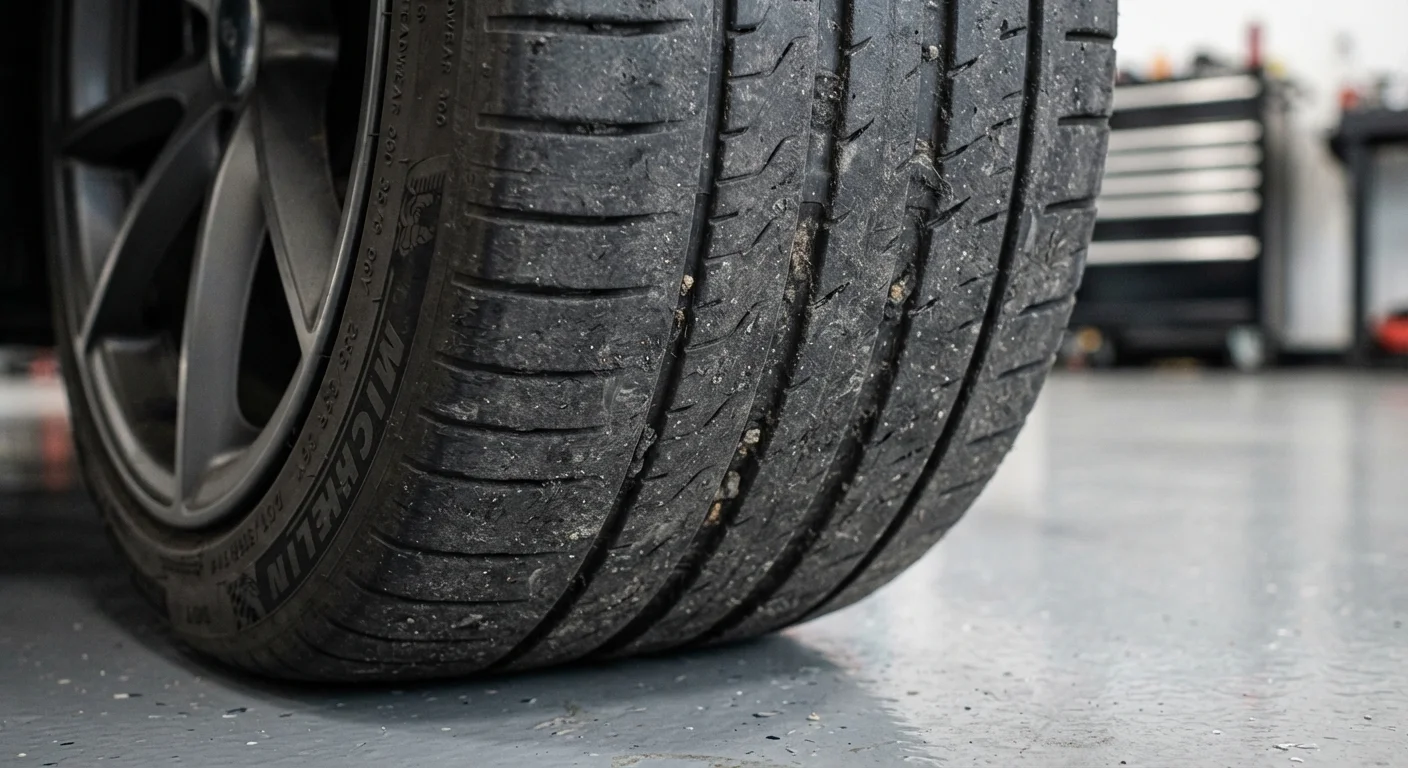
A tire tread wear pattern refers to the specific way rubber is worn down across the tire's surface over time. Rather than wearing evenly across the full width, tires often show distinct zones of heavier wear - on the edges, in the center, or on just one side. These patterns are not random; each tells a story about inflation levels, wheel alignment, or suspension condition.
Tread depth is measured in 32nds of an inch; most new tires start at 10/32" to 11/32", and the legal minimum in most U.S. states is 2/32".
Why Tire Wear Patterns Matter
Most drivers glance at their tires and think in binary terms: flat or not flat. But the tread surface is actually a detailed record of how your vehicle has been operating. Uneven wear patterns are your tires communicating a specific mechanical problem - and the earlier you read them, the cheaper the fix is likely to be.
Tires that wear unevenly don't just need replacement sooner. They indicate something else on the vehicle - whether inflation pressure, alignment angles, or suspension components - is out of specification. Replacing tires without addressing the root cause means the new set will wear the same way. Understanding what each pattern means breaks that cycle.
Make tire inspection part of your regular routine. The pre-trip safety check is a natural moment to crouch down and scan the tread surface for anything irregular.
2/32"
Minimum legal tread depth in most U.S. states
At this depth, wet-road stopping distance increases significantly; replacement is recommended before reaching this threshold.
~25%
Fuel economy loss from severe underinflation
The U.S. Department of Energy notes that tires underinflated by 8+ PSI can reduce fuel economy by up to 3%; chronic low pressure compounds the effect over time.
5,000-7,500 mi
Recommended tire rotation interval
Most major vehicle manufacturers include this interval in their standard maintenance schedules to promote even tread wear.
The Four Most Common Wear Patterns
Center Wear
If the middle of the tread is worn down noticeably more than the outer edges, the tire has been running overinflated. An overinflated tire bulges in the center, causing that zone to carry most of the vehicle's weight. The fix is straightforward: adjust pressure to the specification on your door jamb sticker - not the maximum figure on the tire sidewall, which is a different measurement entirely.
Edge Wear (Both Sides)
Wear across both outer edges, with a relatively intact center strip, is the mirror image: the tire has been chronically underinflated. Low pressure causes the tire to sag and contact the road primarily at its shoulders. Beyond accelerating wear, underinflation increases heat buildup and can raise blowout risk. See our article on why tire pressure matters for a fuller picture of the risks involved.
One-Sided (Inner or Outer Edge) Wear
When only one edge is worn - either the inside or outside - the cause is almost always an alignment or camber problem. Camber refers to the vertical tilt of the tire when viewed from the front of the vehicle. Excessive inward tilt (negative camber) wears the inner edge; excessive outward tilt (positive camber) wears the outer edge. This pattern will not resolve itself with a tire rotation. Wheel alignment symptoms often accompany this wear type - look for the vehicle pulling to one side or a steering wheel that sits off-center.
Cupping or Scalloping
Cupped tires show an alternating high-low pattern across the tread, almost like small scoops have been taken out. This is typically caused by worn or failing shock absorbers or struts, which allow the tire to bounce rather than maintain consistent contact with the road. Cupping is often felt as vibration at highway speeds before it's visible. This repair requires a professional evaluation of the suspension system.
Check Tread Wear at Every Oil Change
Make tire inspection a habit by pairing it with your oil change interval. At each visit, run your hand across the full width of each tire and look for any variation in tread depth from edge to center. Catching a developing wear pattern at 3,000 miles is far cheaper than replacing a set of tires at 20,000.
Diagnosing vs. Repairing: Knowing Your Limits
Reading a wear pattern is something any driver can do. Correcting the underlying cause is a different matter and depends on what's causing it. Inflation issues are entirely DIY - a quality tire pressure gauge and an air source are all you need. Wheel alignment, camber adjustment, and suspension repairs require shop equipment and should be handled by a qualified mechanic.
Tire rotation is a maintenance task that directly influences wear patterns and is part of your vehicle's scheduled maintenance plan. Keeping up with rotation intervals gives you more frequent opportunities to spot emerging wear issues before they become structural.
If you're seeing irregular wear patterns, addressing them promptly is one of the routine maintenance habits that prevent expensive repairs down the road. A wheel alignment typically costs $75-$150 at most shops - far less than a set of prematurely worn tires.
Tire Wear Can Vary by Position
Front and rear tires often wear differently because the front tires handle steering loads in addition to braking. On front-wheel-drive vehicles, front tires also handle acceleration forces, which accelerates wear further. This is one reason rotation - moving tires between axles and sides - meaningfully extends overall tire life.
This article is for general informational purposes. For specific vehicle concerns, consult a qualified automotive technician.